 EN ▾
 ZH
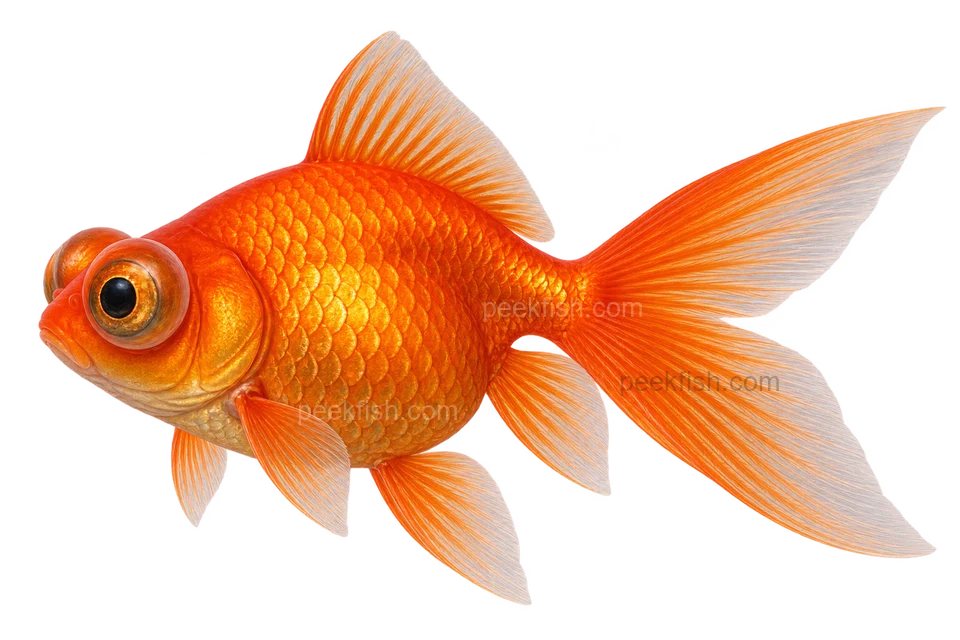
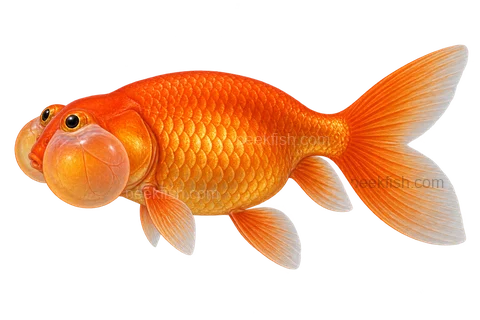
Globe eye / Telescope-eye goldfish
Outward-projecting eyes and a forked divided tail
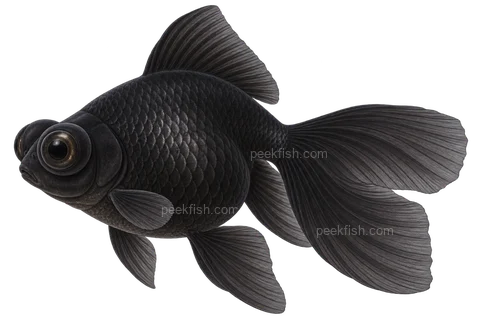
Metallic red is one regional telescope-form appearance. British standards specify more restrictive eye-shape and colour criteria, while actual eye shapes often overlap with moors. This illustration cannot assign show grade. Unlike celestial forms, upward-looking eyes are not the defining trait and the dorsal fin remains present.
- Adult length
- About 10 cm
- Lifespan
- Up to 30 years
- pH
- 7–8.4
- Hardness
- 5–19 dGH
- Natural habitat
- Wild habitats include rivers, lakes, ponds and ditches, often in vegetated still or slow water; ornamental goldfish are domesticated forms.
Avoid decor that may strike the eyes, fin nippers and excessive feeding competition. Eye size alone does not establish visual ability or health. Swimming and feeding ability vary among forms. Provide filtration, oxygenation and maintenance.
Appearance and identification
Compare tail forking and carriage with the broadtail moor; orange versus black colour is not enough to define the forms.
Same-species behaviour
Assess individual swimming and feeding.
Space requirements
Avoid small, unfiltered containers.
Diet and feeding
Use an appropriate goldfish diet with varied foods, adjusting to condition and water quality.
Compatibility limits
Active single-tailed fish may outcompete slower double-tailed forms. Avoid fin nippers and overly competitive companions.
Aquarium environment
Goldfish may eat or uproot plants.
Goldfish
Sources
www.aqueon.com ↗ 2026-10-22
www.fishbase.se ↗ 2026-10-25
www.bristol-aquarists.org.uk ↗ 2026-10-22
www.goldfish-types.info ↗ 2026-10-22
www.goldfish-types.info ↗ 2026-10-22
www.goldfish-types.info ↗ 2026-10-22
www.goldfish-types.info ↗ 2026-10-22