 EN ▾
 ZH
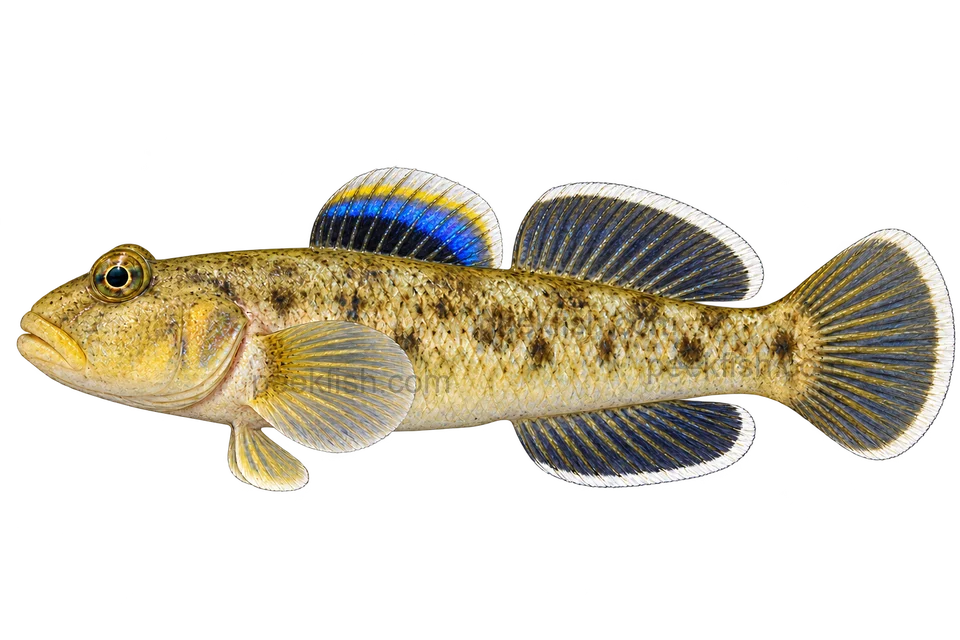
Desert goby
A mottled bottom dweller; males display a blue-and-yellow first dorsal.
Males combine an earthy mottled body with blue and yellow on the first dorsal and pale edges on the other unpaired fins. Females and non-displaying fish can be much plainer.
- Adult length
- Up to 6 cm (standard length, without the tail fin)
- Water temperature
- 20–28 °C
- pH
- 8–8.5
- Hardness
- 9–19 dGH
- Natural habitat
- Lives in pools and streams associated with artesian springs, using shaded areas around plants and rocks in habitats with variable temperature and salinity.
Tolerates a wide range, but avoid abrupt changes. Territorial males need separable space despite their small size.
Appearance and identification
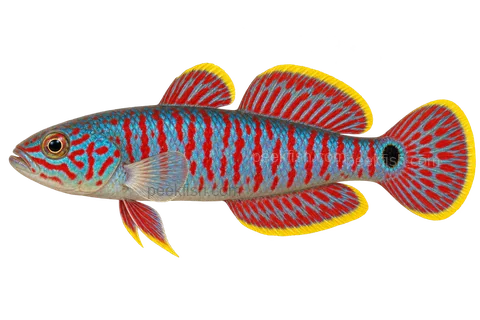
An Australian Lake Eyre basin fish that stays near bottom cover. Unlike the peacock gudgeon, it lacks the blue-red flank pattern and the conspicuous single tail eyespot. Related desert gobies need checks of locality and fine anatomy.
Floor and movement space
Provide sand, stable rocks, caves and visual barriers; plan around actual territories and occupants.
Aquarium environment
Plants add cover but do not replace territorial separation. Suits alkaline water rather than an acidic planted aquarium.
Diet and feeding
Eats small invertebrates, eggs, algae and detritus. Offer varied suitable food; it is not a maintenance-free algae cleaner.
Same-species behaviour
Males defend nests and eggs. Several fish near one shelter are not necessarily schooling; watch persistent chasing and access to food.
Compatibility limits
Eggs and small crustaceans are part of its diet, so shrimp and eggs are at risk. Male territorial conflict matters beyond matching water values.
Similar and related fish
Sources
www.aquariumglaser.de ↗ 2026-10-22
www.fishbase.se ↗ 2026-10-25
fishesofaustralia.net.au ↗ 2026-10-22