 EN ▾
 ZH
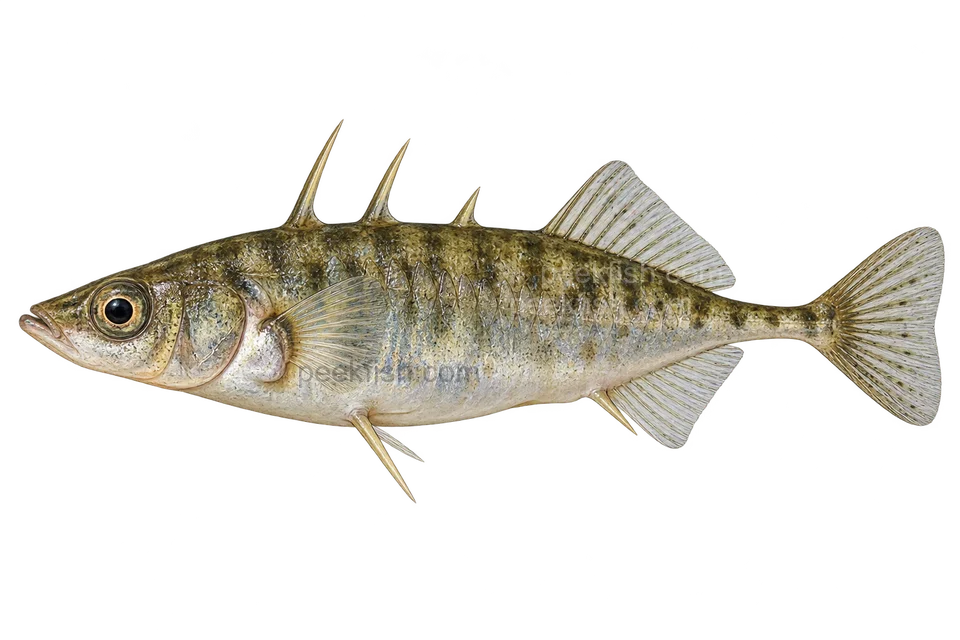
Three-spined stickleback
Three separate dorsal spines; a small fish with vigorous nest defence.
Separate dorsal spines, a narrow tail stalk and a fan-shaped tail stand out; breeding males can look very different.
- Adult length
- About 5.1 cm
- Lifespan
- Up to 2.4 years
Use this pond context only for stock with a confirmed freshwater history. Small size does not imply peaceful behaviour or a mosquito-control fish that needs no feeding.
Appearance and identification
Usually three separate spines precede the soft dorsal fin; the first two are long and the third is shorter. Nonbreeding fish have brown-green backs and silvery sides, while males may develop a red throat and belly when breeding. Plate number and body form vary. Fully plated fish also occur at documented freshwater river sites; an illustration cannot authenticate a population.
Same-species behaviour
Breeding males build and defend nests. Fish seen together outside the breeding season may later exclude one another. Watch for chasing, injury and persistent hiding, and separate fish when exclusion persists; no fixed group size or sex ratio is approved here.
Space requirements
Provide distinct vegetated edges, cover and room to move while retaining access to observe fish health. Minimum area must account for territory, population and summer conditions; body length alone does not establish pond capacity.
Diet and feeding
Offer suitably small animal-based foods and check that each fish is feeding. Natural prey includes invertebrates and may include eggs and small fish; pond prey cannot be assumed to provide a complete long-term ration.
Compatibility limits
Eggs, fry, tadpoles and small invertebrates may be eaten; other small fish may be driven away from a nest. Spines do not guarantee protection from large predators. Sharing a pond entry does not establish compatibility with koi or goldfish.
Aquarium environment
Vegetation provides cover and nesting material, but planted patches may become defended territories. A planted wildlife pond intended to retain tadpoles and diverse small invertebrates is not automatically an appropriate home.
Similar and related fish
Sources
forthriverstrust.org ↗ 2026-10-22
doi.org ↗ 2026-10-22
www.nature.com ↗ 2026-10-22
nas.er.usgs.gov ↗ 2026-10-22
www.dcfreshwaterfish.co.uk ↗ 2026-10-22
api.gbif.org ↗ 2026-10-22