 EN ▾
 ZH
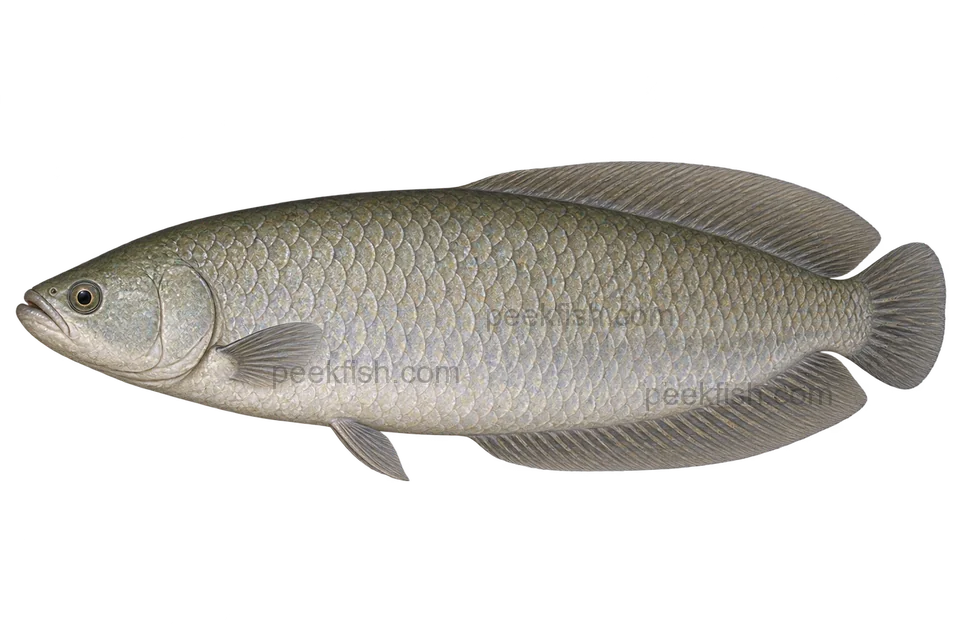
African bonytongue
No chin barbels; a smaller mouth and a broad natural diet
Large grey-silver to olive scales, a small terminal mouth and rounded tail form a robust outline, with dorsal and anal fins on the rear half.
- Adult length
- Up to 100 cm (standard length, without the tail fin)
- Water temperature
- 25–30 °C
- Natural habitat
- Adults inhabit open and nearshore waters of rivers and lakes; juveniles often occupy vegetated swamps.
A large-growing fish. Juvenile availability does not mean long-term suitability for ordinary home aquaria. Eating detritus does not remove the need for deliberate feeding.
Appearance and identification
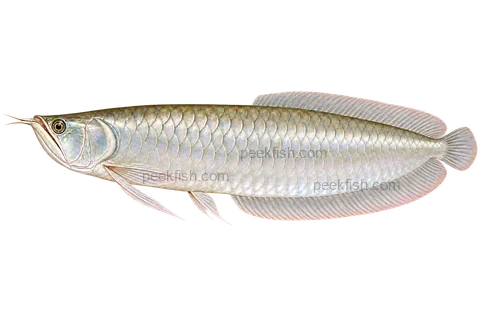
Despite its arowana trade name, this fish lacks chin barbels. Wild fish eat aquatic insects, microcrustaceans, seeds and detritus, not just fish like typical arowanas. Unlike silver arowana, it has a smaller, less upturned mouth.
Adult space
Plan long-term turning, swimming and maintenance space.
Diet and feeding
Larger fish take bloodworms. Wild food use changes with size and local resources.
Compatibility limits
A diverse wild diet does not make it safe for small organisms or a maintenance-free cleaner.
Similar and related fish
Sources
api.gbif.org ↗ 2026-10-22
www.fishbase.se ↗ 2026-10-25
www.aquariumglaser.de ↗ 2026-10-22
www.scirp.org ↗ 2026-10-22