 EN ▾
 ZH
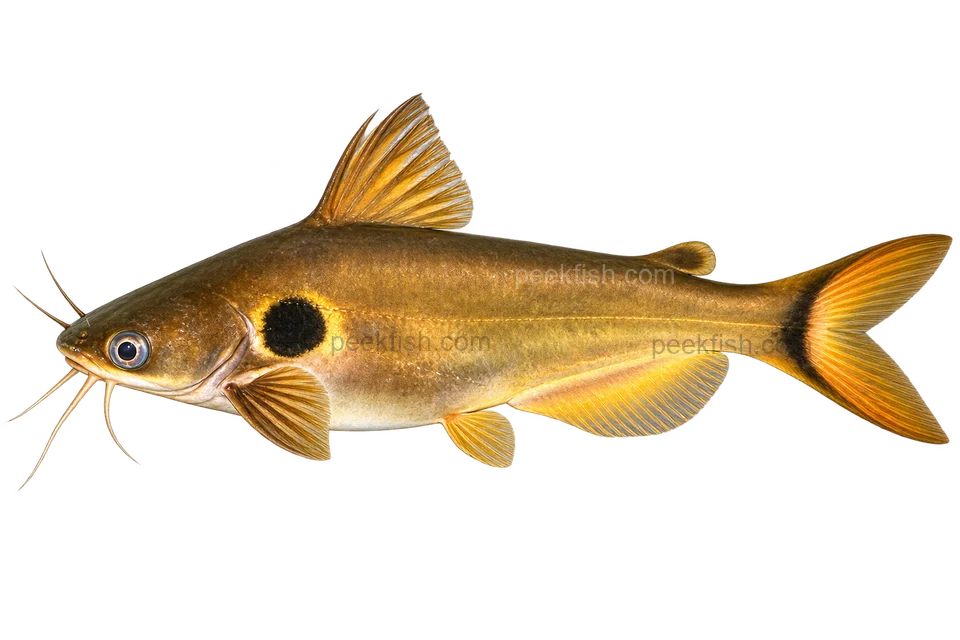
Sun catfish
A conspicuous round shoulder spot; small juveniles grow into a substantial predator.
Golden-brown sides, a pale underside, a round dark shoulder spot and a dark caudal-base band are useful recognition cues. Colour varies, so gold alone is not diagnostic. SF reports 45 cm SL; SC lists 30 cm without a basis. Typical adult total length and typical captive lifespan are unknown, and sale-size juveniles do not represent long-term space needs.
- Length and basis
- 45 cm TL
- Reference temperature
- 23–25 °C
- Captive lifespan
- Unknown (no verified lifespan adopted)
- pH
- 6–7.5 (source care reference)
- Hardness
- 5–25 dGH (source care reference)
Smaller tankmates may be eaten. This is not a peaceful cleaning fish for a small community. Larger companions also require additional room and observation; overlapping temperatures do not prove compatibility. Secure heavy decor against displacement.
Appearance and identification
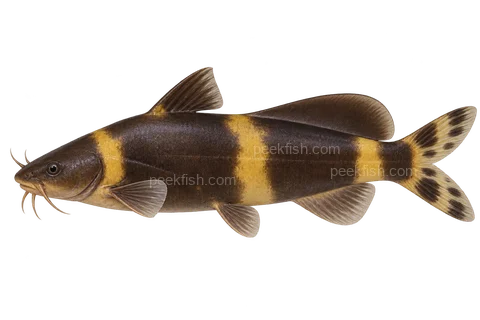
Golden-brown sides, a pale underside, a round dark shoulder spot and a dark caudal-base band are useful recognition cues. Colour varies, so gold alone is not diagnostic. SF reports 45 cm SL; SC lists 30 cm without a basis. Typical adult total length and typical captive lifespan are unknown, and sale-size juveniles do not represent long-term space needs. In the similar H. nigricollaris, the dark shoulder markings join over the back into a collar; this species has separate side blotches. Siamese bumblebee catfish instead show contrasting cross-bands. These visual comparisons do not recommend keeping the species together.
Floor and movement space
The selected SF reference is 23–25°C, pH 6–7.5 and 5–25 dGH; SC pH figures remain separate. Plan swimming space, effective biological filtration, secured decor and shaded refuges for a large adult. A verified social count and lifetime minimum aquarium size remain unknown.
Aquarium environment
A planted display must first accommodate adult space, filtration and shelters. Secure heavy structures and retain accessible feeding and inspection areas. Plant damage and shrimp safety remain unverified; a planted visual preview does not demonstrate suitability.
Diet and feeding
Use suitable complete pellets with appropriate frozen invertebrate foods; live feeder fish are unnecessary. Wild diets include animal and plant material, but that observation does not establish a home-made feed formula. Feed under cover or after dark and check intake.
Similar and related fish
Measurement notes and sources
Source length: 45 cm TL
www.seriouslyfish.com ↗ 2026-10-22
www.scotcat.com ↗ 2026-10-22
nas.er.usgs.gov ↗ 2026-10-22
www.scotcat.com ↗ 2026-10-22
api.gbif.org ↗ 2026-10-22