 EN ▾
 ZH
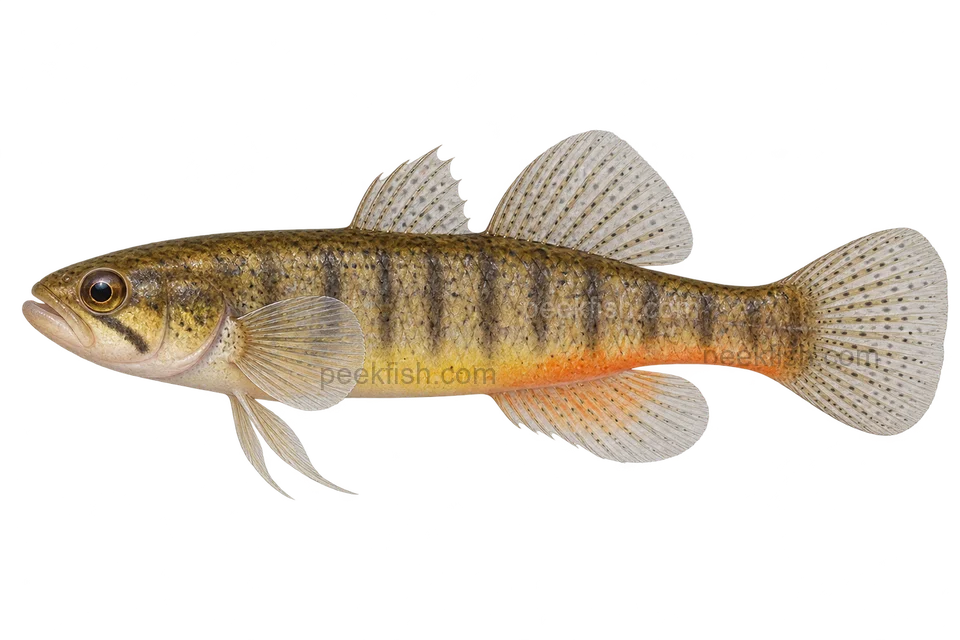
Chinese sleeper
Fine dusky bars and separate pelvic fins; breeding males develop a reddish belly.
Faint bars, a short eye-to-mouth mark and separate pelvic fins distinguish this sleeper. Breeding males change head shape and belly colour. This illustration depicts a less intensified state with sex unspecified.
- Adult length
- Up to 6.2 cm
- Water temperature
- 18–22 °C
The care source suggests cooler water, not a generic warm tropical setup. Small crustaceans are food, so “peaceful” is not a shrimp-safety guarantee. Do not release aquarium fish.
Appearance and identification
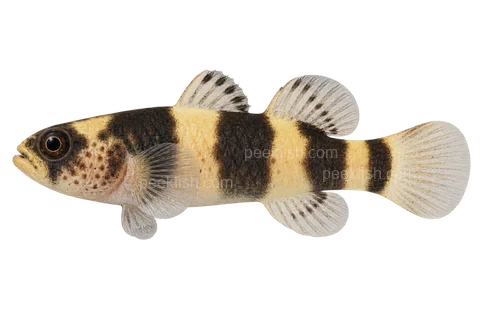
Unlike the strongly banded freshwater bumblebee goby, it has separate pelvic fins and a slightly upturned terminal mouth. It is associated with vegetated, slow-water habitats, not specialised rock grazing. Japanese occurrence includes introductions.
Floor and movement space
Combine planted margins, fine substrate and gentle water movement. A universal minimum tank or group size is unverified; retail juveniles do not determine lifetime space.
Aquarium environment
Vegetated slow-water margins are supported by field evidence. Keep retreats and avoid forcing the entire bottom into strong current. Plant damage is not quantified.
Diet and feeding
Field studies record copepods, cladocerans and chironomid larvae. Offer suitable frozen or live foods; some fish adapt to prepared food.
Same-species behaviour
Males guard eggs and change forehead and head colour through reproduction. Observe food access and territorial pursuit as well as resting behaviour.
Compatibility limits
Shrimplets are at risk from a microcrustacean-feeding fish. Assess size, food competition and nesting behaviour, not temperature overlap alone.
Similar and related fish
Sources
www.museum.kagoshima-u.ac.jp ↗ 2026-10-22
www.aquariumglaser.de ↗ 2026-10-22
html.rhhz.net ↗ 2026-10-22
kiss.kstudy.com ↗ 2026-10-22