 EN ▾
 ZH
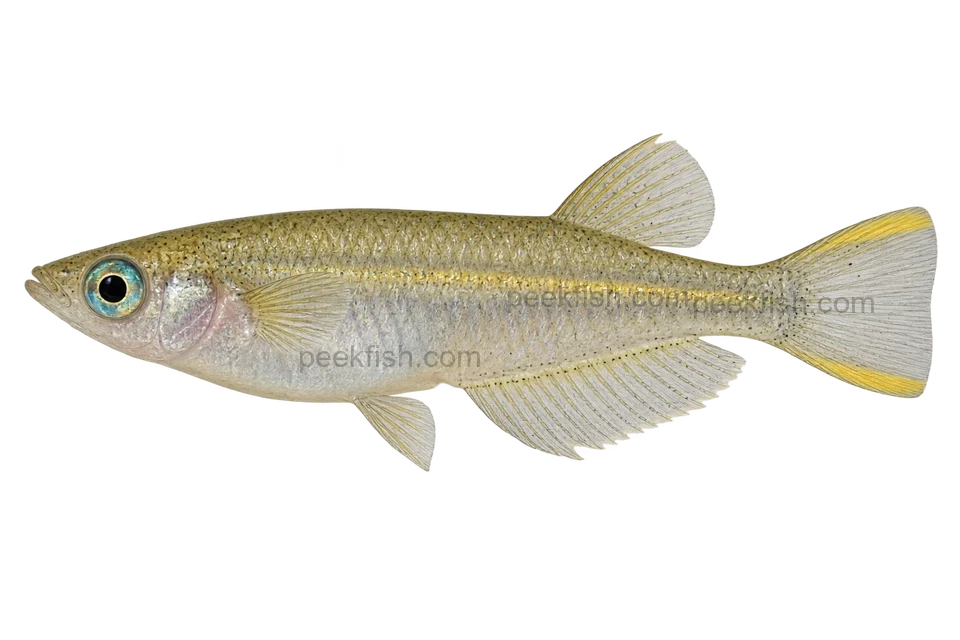
Javanese ricefish
Blue eyes and yellow tail bands; verify the stock’s salinity history first.
Natural males are pale silver-olive with yellow submarginal bands on the upper and lower tail. The body is deeper than miniature ricefishes. Freshwater and brackish records do not establish the right water for every stock.
- Adult length
- Up to 3.5 cm (standard length, without the tail fin)
- Water temperature
- 24–29 °C
- pH
- 7–9
- Hardness
- 5–25 dGH
Confirm origin, breeding history and current salinity before acquisition. Salt tolerance neither proves a salt requirement nor permits abrupt transfer of any population to fresh water. Unverified stocks are not endorsed for freshwater planted tanks.
Appearance and identification
Yellow male tail bands help comparison with O. dancena, which shows white fin edges and a blue anal band. Females and pale specimens can be difficult to distinguish from photographs alone. Check locality and fin characters; “blue-eyed ricefish” is a trade label, not another species.
Same-species behaviour
The profile suggests eight or more, but courting males may chase rivals. Watch subordinate fish and provide visual cover; this number is not a capacity rule.
Space requirements
A 45 × 30 cm base is an attributed reference without a validated adult sex-ratio or capacity. Provide upper-water swimming room and refuge; determine the water regime before selecting plants and companions.
Diet and feeding
Offer suitably small prepared food with small live or frozen items. Check each fish’s intake; salinity tolerance does not replace feeding management.
Compatibility limits
Match salinity history, water requirements and feeding behaviour. Keep breeding stocks separate from O. dancena; visual similarity and overlapping ranges do not prove compatibility.
Aquarium environment
Vegetation can shelter verified freshwater stocks. Under brackish conditions, assess plant salt tolerance separately. Females briefly carry eggs before attaching them to structures, and adults may eat fry. Shrimp risk is unknown.
Similar and related fish
Sources
www.seriouslyfish.com ↗ 2026-10-22
www.aquariumglaser.de ↗ 2026-10-22
www.nature.com ↗ 2026-10-22