 EN ▾
 ZH
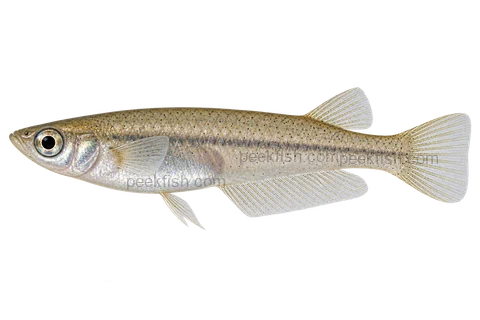
Japanese ricefish (medaka)Up to 3.6 cm · 16–22 °CNatural grey-brown medaka; ornamental colours do not create new species.
Separate Japanese ricefish varieties from other Oryzias species, then compare colour, fins, sex differences and environmental requirements.
Read the full guide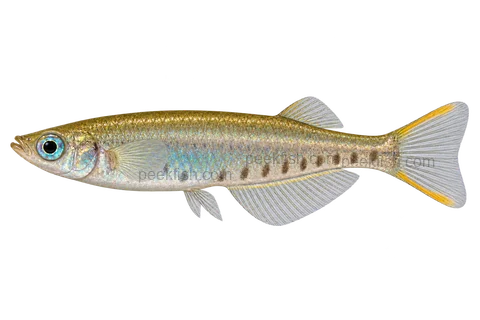
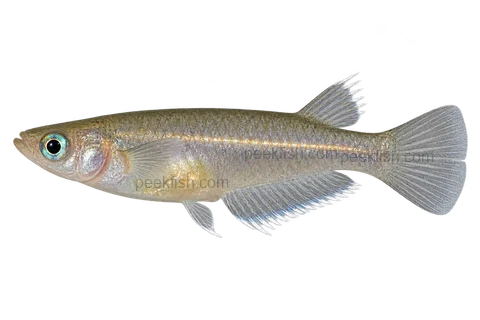
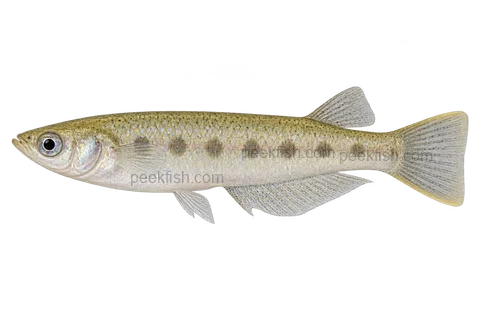
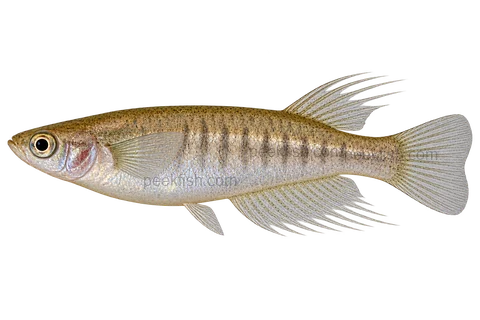
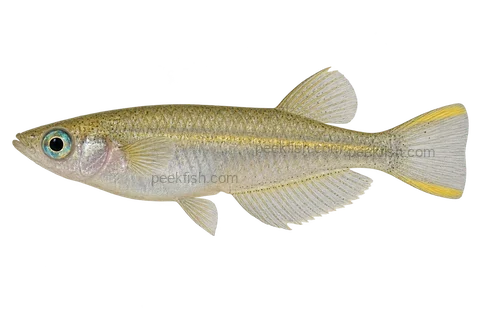
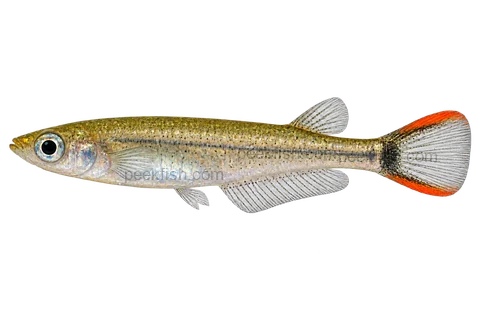
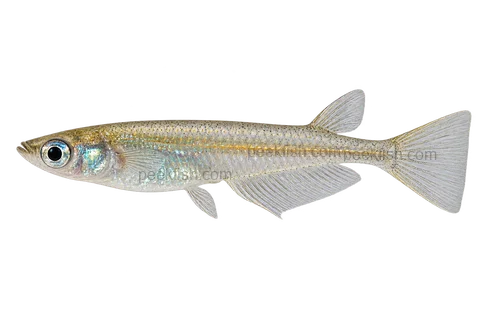
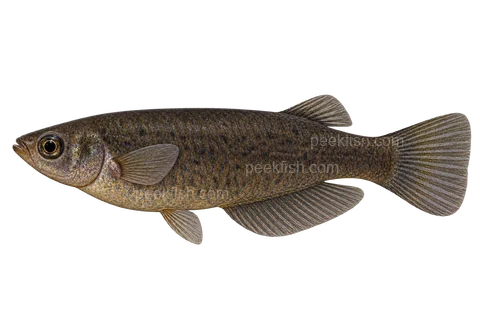
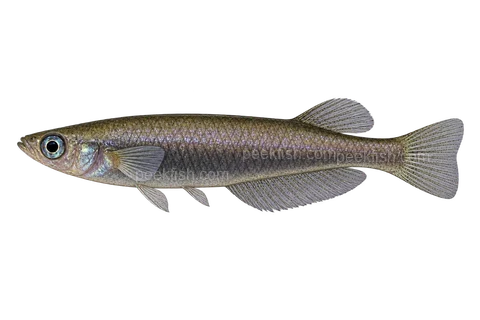
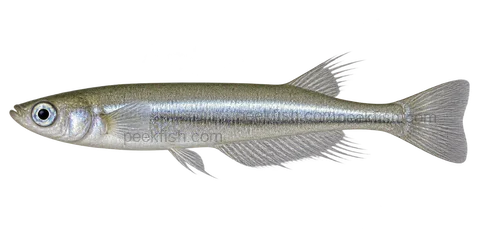
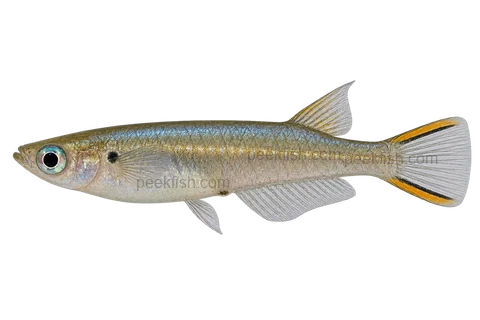
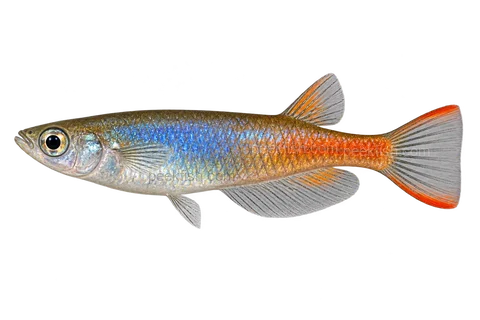
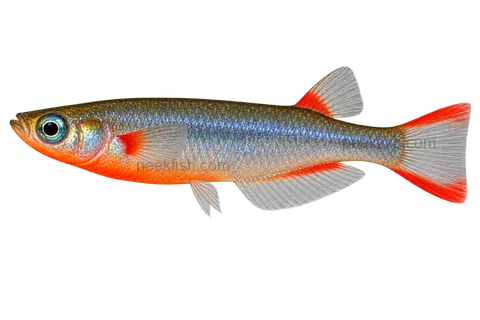
Japanese ricefish, Oryzias latipes, include domestic forms such as the golden variety. Daisy’s ricefish, O. woworae, is a separate species, not a blue medaka variety. Resolve the scientific name before interpreting a colour label. This gallery uses species entries; different colours do not increase the species count, and an ambiguous sales name remains a question to investigate.
Daisy’s ricefish combines a blue sheen with reddish-orange fin markings. Adult males are generally more colourful and have longer dorsal and anal fins than females. A paler individual is therefore not automatically a different species. Compare sex and stage, marking positions and body proportions. The apparent intensity of blue in a photograph is not enough for identification.
The referenced Japanese and Daisy’s ricefish profiles give different temperature recommendations. Do not extend experience with one species to the entire genus. Resolve identity and origin, then consult the relevant profile. When comparing measurements, also check whether they describe routine care, an observation or an unresolved value.
Japanese ricefish females can carry eggs externally for a time before depositing them on plants or other surfaces. This differs from giving birth to fry. Follow the profiles below for the individual species rather than transferring one breeding routine to every ricefish. The gallery introduces the distinctions; the profile supplies the specific context.