 EN ▾
 ZH
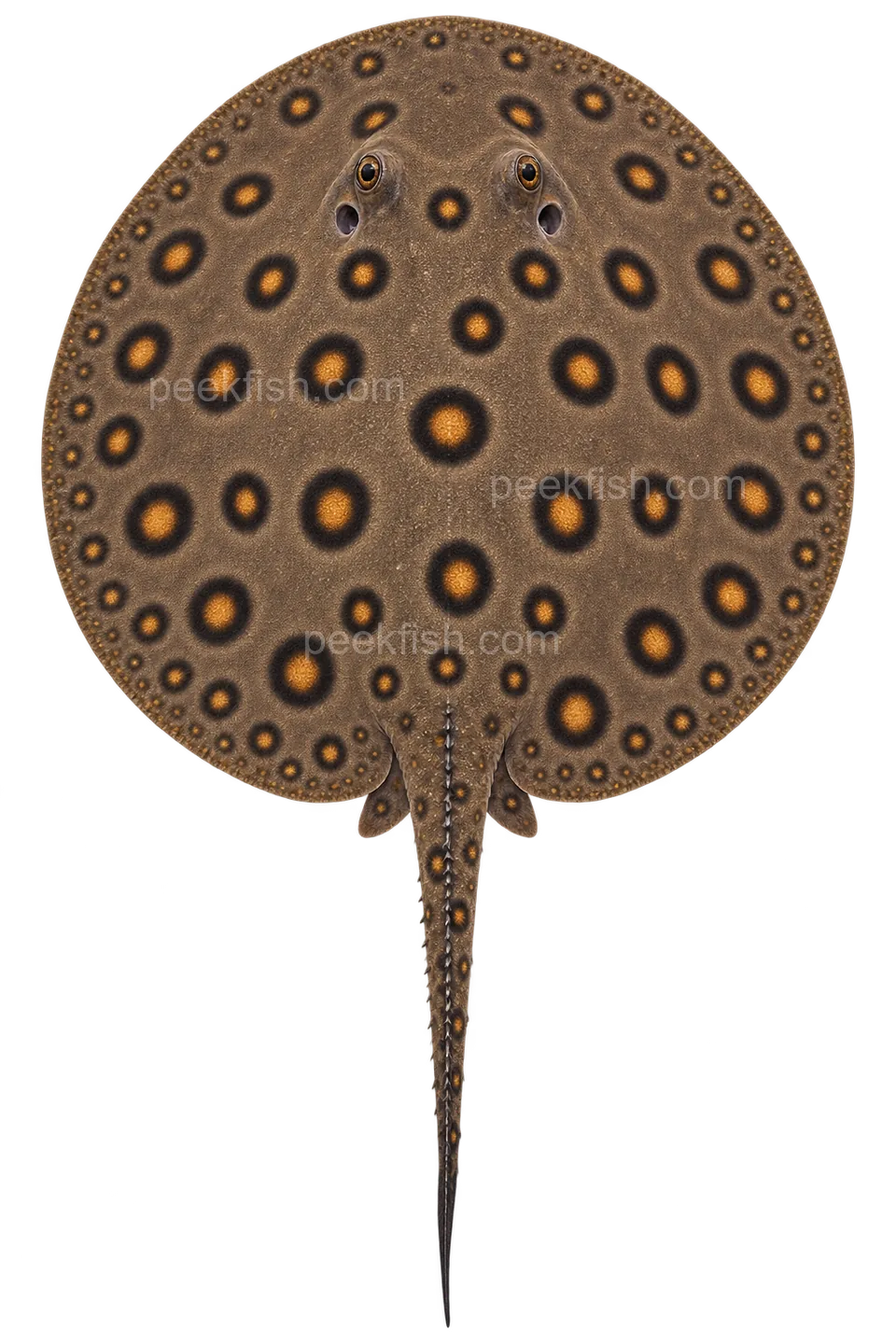
Ocellate river stingray
Orange-yellow eyespots with dark rings on a brown-grey disc.
The broad brown-grey disc carries orange-yellow spots bordered by dark rings. Eyes and spiracles sit above the disc; the mouth and gill openings are underneath. The spiracles allow water intake while the ray rests partly buried.
- Adult size
- Up to 50 cm (disc width)
- Water temperature
- 24–26 °C
- Lifespan
- 20 years or more
- pH
- 6–7.5
- Hardness
- 1–12 dGH
- Native range
- South America: Uruguay, Paraná-Paraguay, Orinoco, and Amazon River basins.
- Natural habitat
- Inhabits river sandbanks, shallows and slow tributaries over mud or sand, also entering flooded forest and flood-recession lakes and ponds.
Disc diameter can approach 61 cm, so a small specimen needs long-term space planning. The tail bears a venomous sting; small fish and crustaceans may become prey.
Appearance and identification
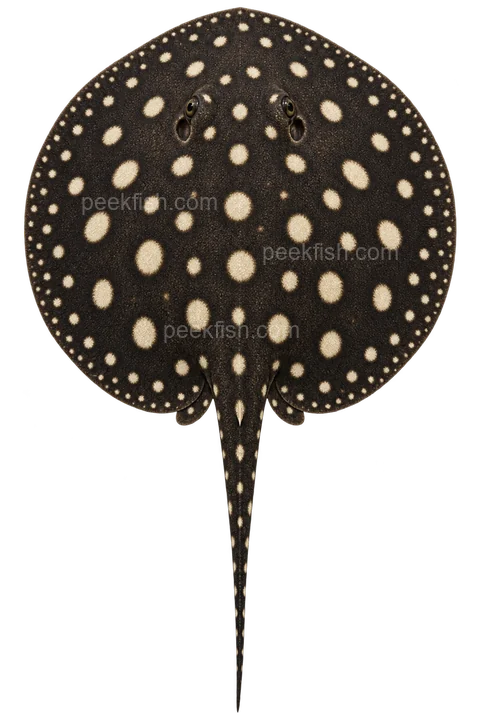
Compare its ringed orange spots with the pale spots on the dark disc of P. leopoldi. Similar species, geographic variation and hybrids complicate identification. The broad disc works close to the bottom during feeding. The tail is not a handle.
Floor and movement space
Prioritize open floor area and turning room. Plan 240 × 90 × 75 cm for an adult or pair, adjusted for individual size, filtration and separation options. Fine sand allows burying. Secure furnishings, protect heaters and fit a firm lid.
Aquarium environment
Burying and broad-disc movement conflict with dense rooted planting, sharp decor and narrow routes. Plants may be damaged; shrimp are not safe.
Diet and feeding
Adults eat fishes and crustaceans. Offer varied, appropriately sized aquatic animal foods and check each fish feeds; it cannot live on tank leftovers.
Compatibility limits
Small companions may be swallowed, while aggressive fish can injure the ray. Suckermouth catfish may damage discs. Check mouths, behaviour and floor space individually.
Same-species behaviour
Courtship chasing and biting can injure a female; a purchased pair is not automatically peaceful. Monitor and keep separation options.
Similar and related fish
Sources
aqua.org ↗ 2026-10-22
www.fishbase.se ↗ 2026-10-25
www.seriouslyfish.com ↗ 2026-10-22
pmc.ncbi.nlm.nih.gov ↗ 2026-10-22