 EN ▾
 ZH
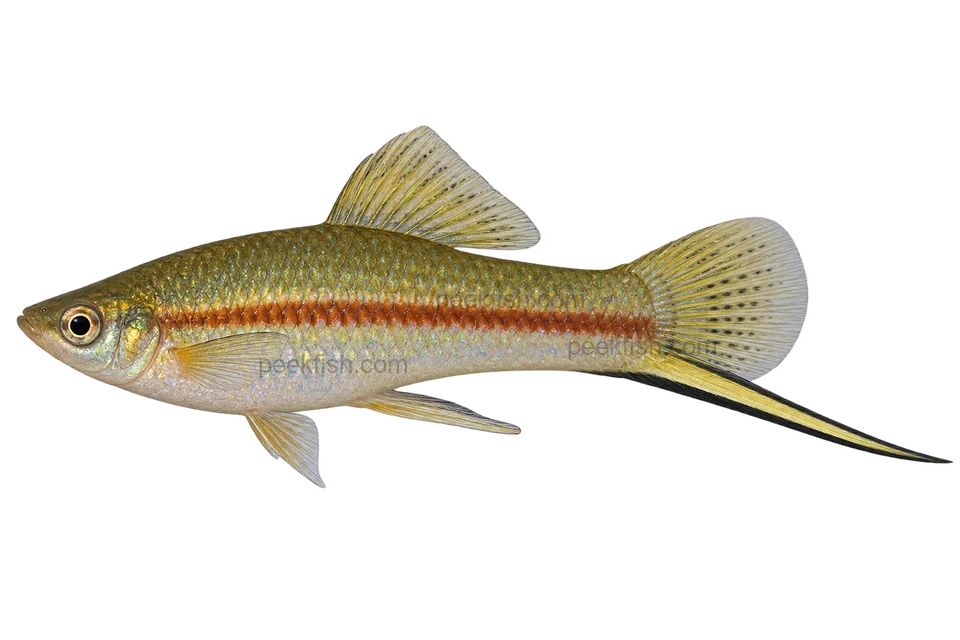
Green swordtail
Mature males have a lower caudal sword; females and juveniles cannot be identified by that trait.
- Adult length
- Up to 14 cm (standard length, without the tail fin)
- Water temperature
- 16–28 °C
- pH
- 7–8
- Hardness
- 10–25 dGH
Provide a long swimming lane and manage male competition; sword length is not standard body length. This entry retains Seriously Fish’s 16–28°C, pH 7–8 and GH 10–25. Fishkeeper separately lists 15–28°C, pH 7–8 and dH 8–20 for captive-bred trade stock; the ranges are not merged.
Appearance and identification
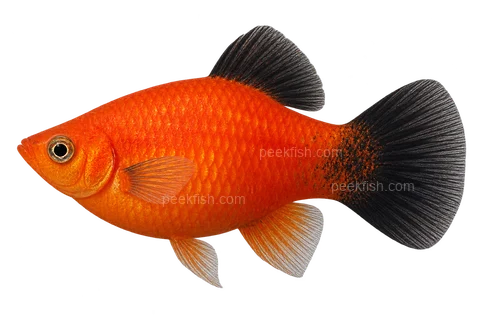
A typical mature male has an extended lower caudal lobe and a prominent gonopodium, with a more streamlined body than a platy. This male pattern cannot be applied to females or juveniles; some ornamental strains also extend fins in females or at other fin positions. Trade hybrids and selected forms mean that a sword alone cannot certify species or sex.
Same-species behaviour
Seriously Fish reports male dominance hierarchies in confined spaces. Fishkeeper recommends a single male in smaller setups, or three or more males outnumbered by females in larger groups. These are space-dependent recommendations without a complete footprint/count combination, not stocking formulas. Monitor pursuit and retain separation options.
Space requirements
The source lists a 120 × 30 cm base without a complete group-size and sex-ratio context. Plan around adults, swimming room and offspring.
Diet and feeding
Use complete dried foods supplemented with suitable live or frozen foods.
Compatibility limits
Fishkeeper advises against very small fish as companions. Candidates also need matching water conditions and adequate space. Hybridization with related platies is possible, so separate provenance groups or lines when preservation matters. Competition among males requires separate social management; a companion list cannot replace monitoring pursuit.
Aquarium environment
Keep a long open swimming lane; dense planting does not solve competition in cramped quarters.
Similar and related fish