Moving an aquarium means transporting animals, filter media and an empty tank while ensuring a suitable setup is ready at the destination. This guide covers household freshwater moves. Long-distance journeys, very large fish or tanks and animals with specialised transport needs warrant experienced professional planning.
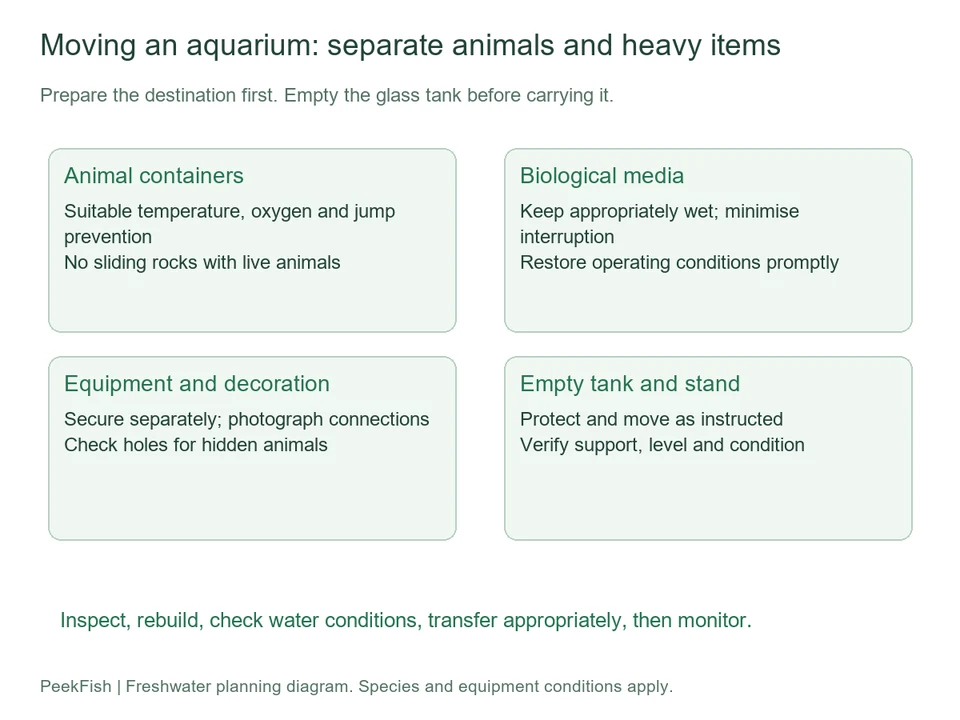
Prepare the destination before dismantling
Check support, level, space, power and maintenance access, as well as doorways, stairs and turns along the route. Compare source-water conditions and prepare suitable water where needed. Do not discover an unsuitable supply or unstable stand only after arriving with the fish.
Arrange enough help, appropriate containers and temperature protection, with more setup time than you expect to need. If the destination is being painted, renovated or cannot support an immediate restart, arrange suitable temporary accommodation first.
Pack different components separately
| Component | Priority |
|---|---|
| Fish and other animals | Suitable containers, temperature, oxygen and escape prevention; separate incompatible animals as needed |
| Biological media | Keep appropriately wet, minimise interruption and restore operating conditions promptly |
| Rocks, wood and equipment | Secure separately against movement; do not mix heavy loose objects with animals |
| Glass tank | Remove water and substrate, then protect and move according to the manufacturer’s requirements |
Transport water can help maintain continuity, but the amount of old water retained does not replace care of mature media or assessment of the destination supply. Biological filtration is not simply something contained in old water.
Dismantle with the restart in mind
Photograph connections. Disconnect and allow a heater to cool in water as instructed before removal. Check holes in decorations and wood for hidden animals. Capture gently with tools appropriate to the fish and any fin spines; seek experienced help with difficult large or spiny animals.
Use containers without chemical residues and protect them from sun, temperature extremes and jolting. Do not transport fish with sliding rocks or inflate bags by mouth. Specialist gas packing or long journeys should be arranged with experienced people rather than improvised with ordinary plastic bags.
Restore a usable environment promptly
- Inspect the tank, stand and connections for damage and confirm stable placement.
- Restore substrate, decoration and equipment safely, avoiding unstable structures.
- Add appropriately treated, suitable water, start filtration and temperature control, and check for leaks.
- Assess water and temperature differences and the transport circumstances before transferring fish. One fixed acclimation duration does not suit every journey.
- Observe and test after transfer. Do not use moving day to add more fish or a large feeding.
If equipment cannot immediately be restored, temporary containers still need appropriate oxygen, temperature and water quality. Do not leave fish waiting until all the furniture has been moved before beginning aquarium setup.
Keep monitoring after the move
Transport can alter filtration, source water and the environment. Continue checking the animals, temperature, leaks and relevant measurements such as ammonia and nitrite. Resume feeding and maintenance for the actual conditions. “Same fish and old water” is not a reason to skip testing.
Sources
- Aqueon: aquarium transport and reinstallation
- INJAF: moving plans and source-water differences
- UF/IFAS: biological filtration and environmental conditions