 EN ▾
 ZH
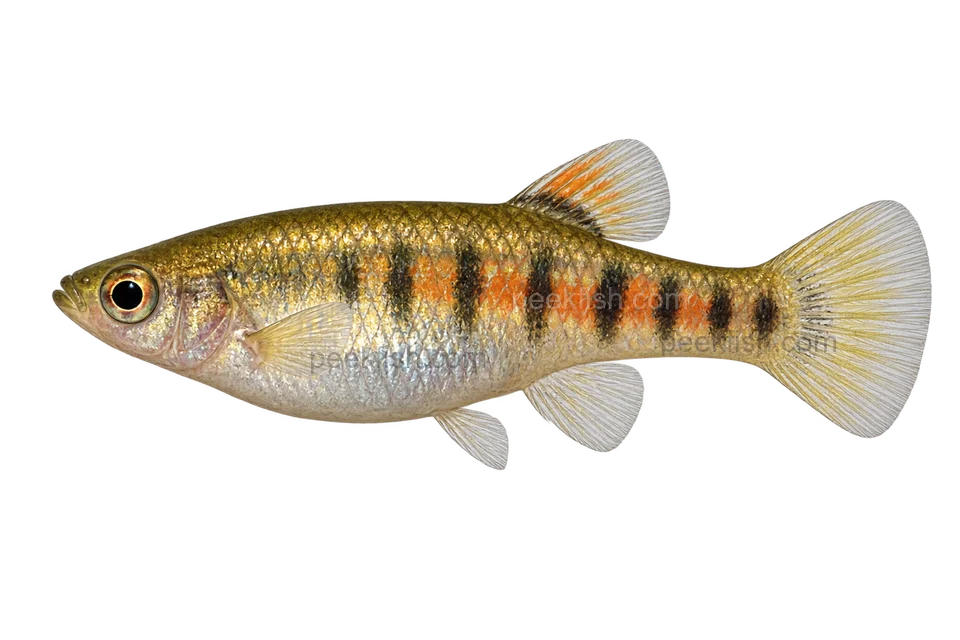
Tiger teddy
Olive-gold sides carry short bars and orange areas; females are fuller and males smaller.
- Adult length
- Up to 2.5 cm (standard length, without the tail fin)
- Water temperature
- 24–28 °C
- pH
- 7–8
- Natural habitat
- Native to the Truandó River, a tributary of the Atrato in Colombia.
Shy; best kept as a small colony of its own. Females can fight and cause casualties; dense planting helps reduce conflict. Newborn fry need minute foods.
Appearance and identification
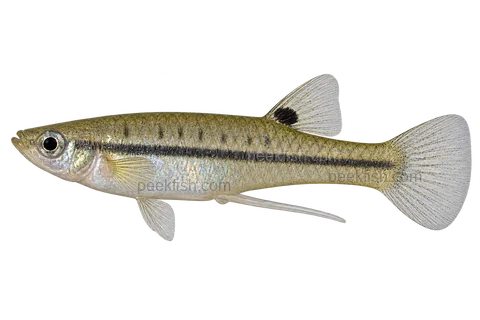
Compare the short flank bars and intervening orange areas with the long horizontal stripe of H. formosa. Females are fuller-bodied; males are smaller and have a prominent gonopodium. Pattern and shape vary with individual, condition and stage.
Same-species behaviour
Females sometimes attack other fish of the same species and can cause casualties. Keep a group with more females than males.
Space requirements
25–30 L suits a small group.
Diet and feeding
Adults accept suitably small live or frozen foods and crushed dry foods. Newborns cannot eat microworms or newly hatched Artemia in their first few days and initially need infusoria-type foods.
Compatibility limits
More shy than H. formosa; best in a species-only setup. Very small, gentle companions and dwarf shrimp are possible, but avoid large, boisterous, predatory or fin-nipping fish.
Aquarium environment
Dense planting provides cover and can reduce aggression within the species. Fine-leaved and floating plants give refuge for fry. Use gentle filtration, avoid strong currents and maintain clean water.
Similar and related fish
Sources
riverparkaquatics.co.uk ↗ 2026-10-22
www.fishbase.se ↗ 2026-10-25
www.seriouslyfish.com ↗ 2026-10-22
api.gbif.org ↗ 2026-10-22