 EN ▾
 ZH
Black ricefish
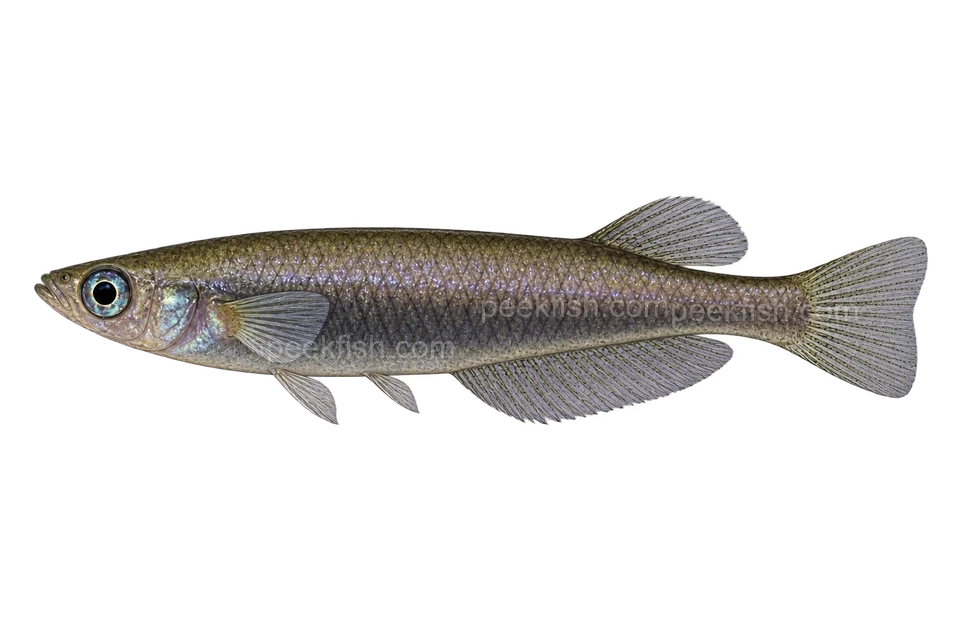
A dark Lake Poso male; open water, companions and several small meals matter.
The natural adult male is charcoal to muted violet-grey and slender; females are more silvery and translucent. This Lake Poso species should not inherit cold-water or small-container assumptions from Japanese medaka.
- Adult length
- Up to 5 cm (standard length, without the tail fin)
- Water temperature
- 25–30 °C
- pH
- 7.5–8.5
Researchers observed particular shyness and stress in small groups. One large meal does not replace several small meals suited to a small mouth and low intake per feeding; monitor condition and intake.
Appearance and identification
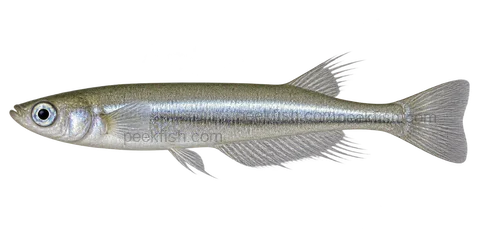
Compared with the open-water O. sarasinorum, the male is darker and lacks that species’ conspicuous silvery lateral band. The breeding distinction is clearer: females briefly carry eggs before transferring them to a substrate, whereas O. sarasinorum carries them until hatching. Sex and condition affect colour; the illustration cannot identify mixed stocks.
Same-species behaviour
The researchers specifically recommend more than ten O. nigrimas to reduce the shyness seen in small groups. An exact sex ratio is unknown; this is neither a universal ricefish number nor a promise of tight schooling.
Space requirements
Research guidance for adults lists at least 80 cm tank length, 0.16 m² base and 45 L, alongside group and open-swimming needs. These are attributed recommendations, not an approved universal project minimum or a litres-per-fish capacity formula.
Diet and feeding
The paper identifies this small-mouthed open-water plankton feeder as benefiting from several small meals daily. Use ingestible particles or small live food and adjust amounts from gut filling and body condition.
Compatibility limits
Evidence of small-group stress does not authorize arbitrary community combinations. Prioritize conspecific numbers and feeding access. The study observed benefits from other swarming companions but did not validate a universal tankmate list.
Aquarium environment
Keep an open swimming lane with edge cover and egg-attachment surfaces. A spawning mop can support observation of egg transfer after brief carrying. Dense plants cannot replace swimming room or ensure egg and fry survival.
Similar and related fish