 EN ▾
 ZH
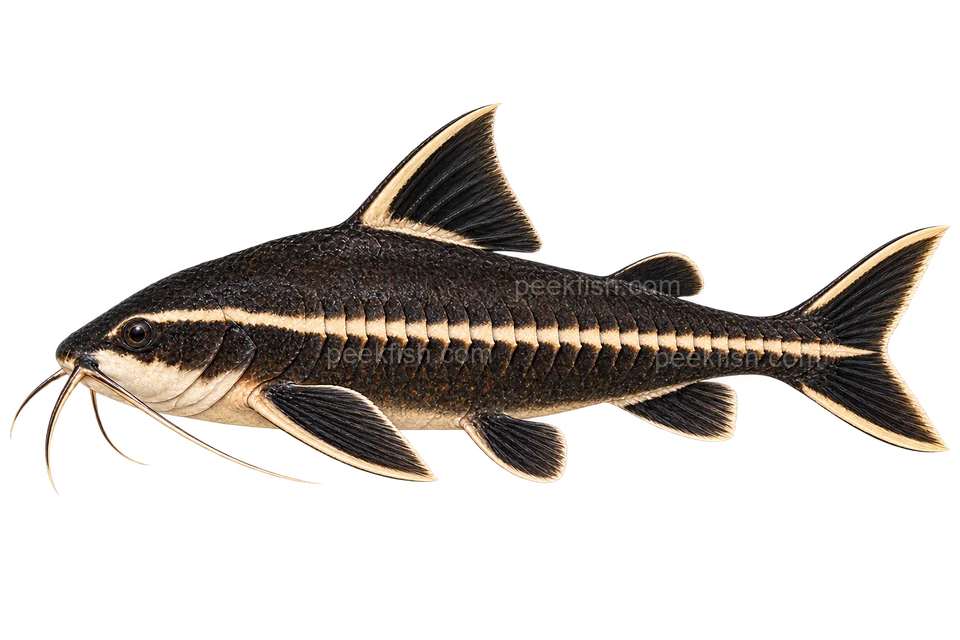
Striped Raphael catfish
A pale stripe crosses thorn-bearing side plates; small-fish predation and net entanglement matter.
A pale lateral stripe runs from above the eye toward the tail across a row of backward-hooked bony scutes on a dark brown to black fish. A broad head, strong pectoral spines and hiding behaviour are conspicuous. Reaches 24 cm SL.
- Adult length
- Up to 43 cm (standard length, without the tail fin)
- Water temperature
- 24–30 °C
- pH
- 5.8–7.5
- Hardness
- 2–20 dGH
- Natural habitat
- Inhabits slow or still tributaries, creeks and swamps, sheltering among roots and submerged vegetation.
Strong pectoral spines and side armour can catch in nets and injure handlers; guide the fish into a suitable container rather than grasping spines or pulling a trapped fish. Offer separate refuges to avoid injury in shelter disputes.
Appearance and identification
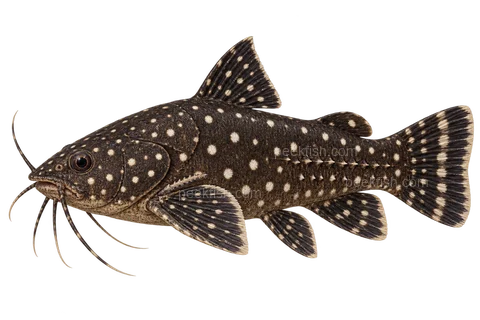
P. costatus is a separate valid species. Relatives differ in stripe and scute features, so trade names alone are not enough. Compared with spotted Agamyxis pectinifrons, this fish shows a continuous pale side stripe rather than scattered pale spots.
Floor and movement space
Inactivity does not justify a permanently small tank.
Aquarium environment
Plant shade can provide cover, but keep shelters and feeding areas accessible for inspection.
Diet and feeding
Use suitable complete sinking food as a staple, with frozen or live foods as supplements. Feed shy individuals after lights out and verify intake. Do not rely on leftovers or treat the fish as a cleaning device.
Same-species behaviour
Keep at 24–30°C, pH 5.8–7.5 and 2–20 dGH. Provide dim areas and several shelters; conspecifics may compete for favoured refuges.
Compatibility limits
Small fish may be eaten.
Similar and related fish
Sources
www.seriouslyfish.com ↗ 2026-10-22
www.scotcat.com ↗ 2026-10-22
researcharchive.calacademy.org ↗ 2026-10-22
doi.org ↗ 2026-10-22
www.scotcat.com ↗ 2026-10-22
api.gbif.org ↗ 2026-10-22