 EN ▾
 ZH
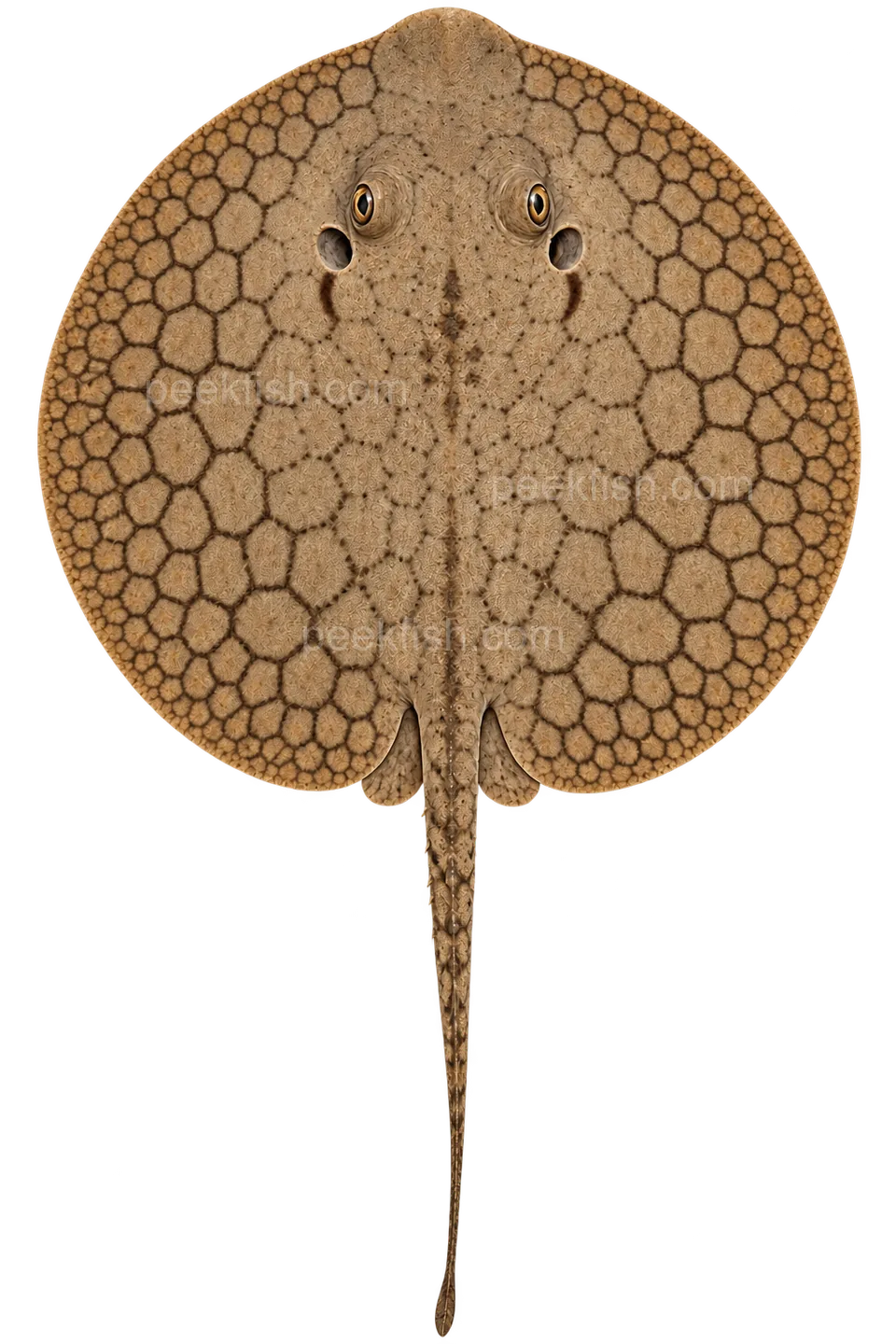
Smooth-back river stingray
Variable fine reticulation and a dark mark behind the spiracle invite closer inspection.
Brown-grey rays assigned to P. orbignyi range from strongly reticulated to almost plain, even among captive offspring, so each pattern is not an extra species. A dark mark behind the spiracle is a useful cue.
- Water temperature
- 24–26 °C
- pH
- 6.8–7.5
- Natural habitat
- Inhabits river sandbanks, shallows and slow tributaries over mud or sand, also entering flooded forest and flood-recession lakes and ponds.
Teacup describes a small sale fish, not a small adult. Adults can be larger than the 35–37.5 cm DW sometimes quoted. Sting and predation risks apply.
Appearance and identification
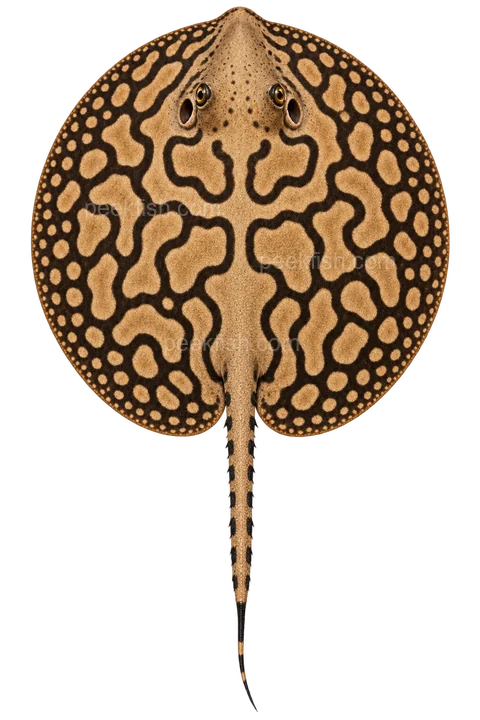
Compare the fine netlike pattern with the broad central vermiculations and pale kidney-like patches of P. wallacei. Reticulated rays are not one species: P. siponinmorok was described in 2026 from a former orbignyi-like concept. Mantilla or teacup trade labels do not identify this species.
Floor and movement space
Plan 180 × 60 × 60 cm for one adult. Preserve open floor space, turning room and separation options.
Aquarium environment
Maintain clear routes for the disc. Rooted plants may be disturbed. Dense decor needs a space check.
Diet and feeding
Eats fishes and aquatic invertebrates. Offer suitable varied foods and confirm feeding; bottom feeding is not waste disposal or a substitute for deliberate nutrition.
Compatibility limits
Small fish and shrimp may become prey. Disc-attaching or strongly territorial companions may cause harm. Consider size, floor space and behaviour.
Same-species behaviour
Track individuals and breeding separately when keeping multiple rays; hybrids do not keep this species name.
Similar and related fish
Sources
www.aquariumglaser.de ↗ 2026-10-22
www.seriouslyfish.com ↗ 2026-10-22
www.ni.bio.br ↗ 2026-10-22