 EN ▾
 ZH
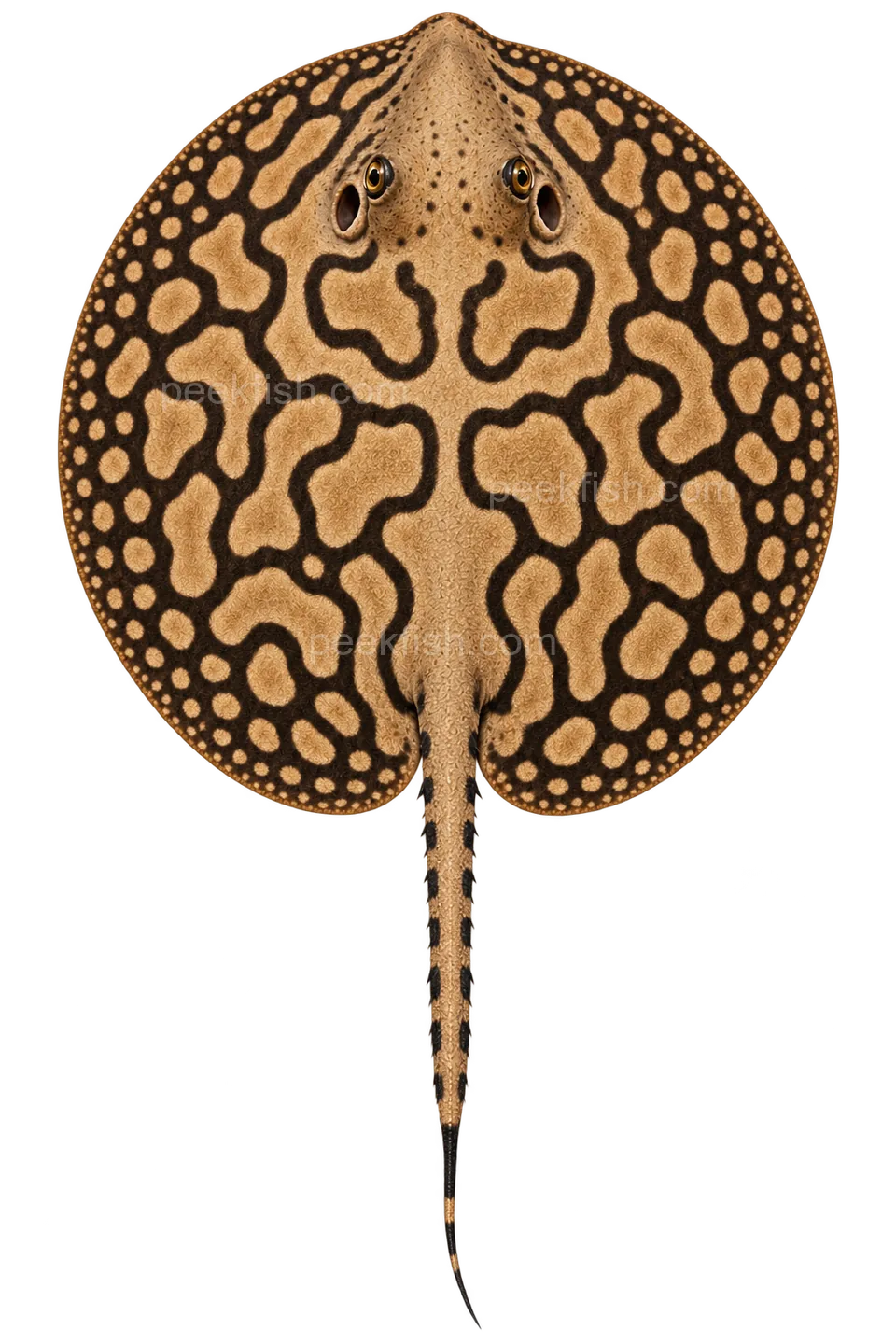
Cururu river stingray
Broad dark vermiculations outline pale patches, with dark bands on the tail.
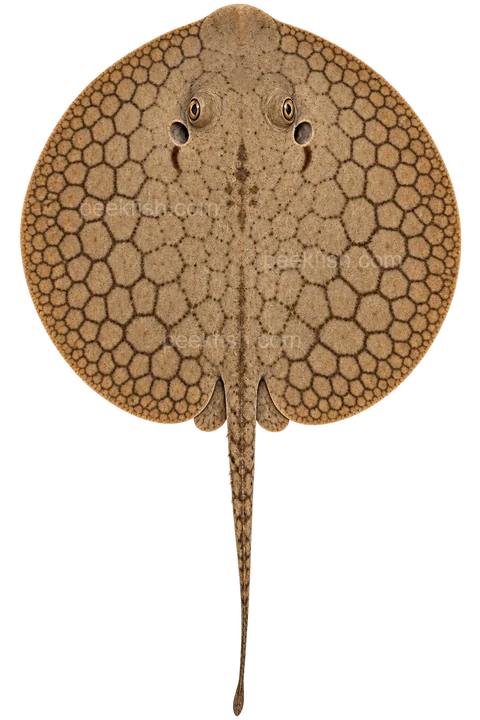
This freshwater ray is native to the Rio Negro drainage in Brazil. Broad dark vermiculations frame pale brown kidney-like or omega-like patches, with smaller markings near the disc edge and dark bands along the tail. Compare it with the finer reticulation of P. orbignyi.
- Water temperature
- 28–30 °C
- Natural habitat
- Native to the Negro River in Amazonas, Brazil.
Relatively small does not mean suitable for a nano aquarium. Disc width, tail movement and predation need specialist space. Adults consume shrimp and small characins. The sting is hazardous.
Appearance and identification
Rio Negro fish were historically mislabelled histrix or hystrix; true P. histrix is separate. A relatively small freshwater ray, but the 31 cm disc width is an upper record, not a typical adult size.
Floor and movement space
Allow at least about 182 × 91 cm of floor area for one fish, and more for multiple rays. Keep turning and tail room open, with a thin sand area if used.
Aquarium environment
Keep feeding access and clear bottom routes. Plants and decor must leave turning room.
Diet and feeding
Young take aquatic insects among litter, then shrimp and small characins as they grow. Suitable sinking carnivore pellets and animal foods are usually accepted. Check each fish feeds.
Compatibility limits
Shrimp and swallowable fishes are natural prey. A peaceful label does not remove predation. Other rays need individual assessment of identity, breeding and floor space.
Similar and related fish
Sources
www.aquariumglaser.de ↗ 2026-10-22
www.fishbase.se ↗ 2026-10-25
tb.plazi.org ↗ 2026-10-22
wharfaquatics.co.uk ↗ 2026-10-22