Start summer cooling with the actual water temperature and its daily pattern, then compare it with the animals’ needs. There is no single upper limit for every fish, and an air-conditioner setting is not a water measurement. This guide covers household freshwater aquariums; specialist coldwater or sensitive breeding setups need more specific control.
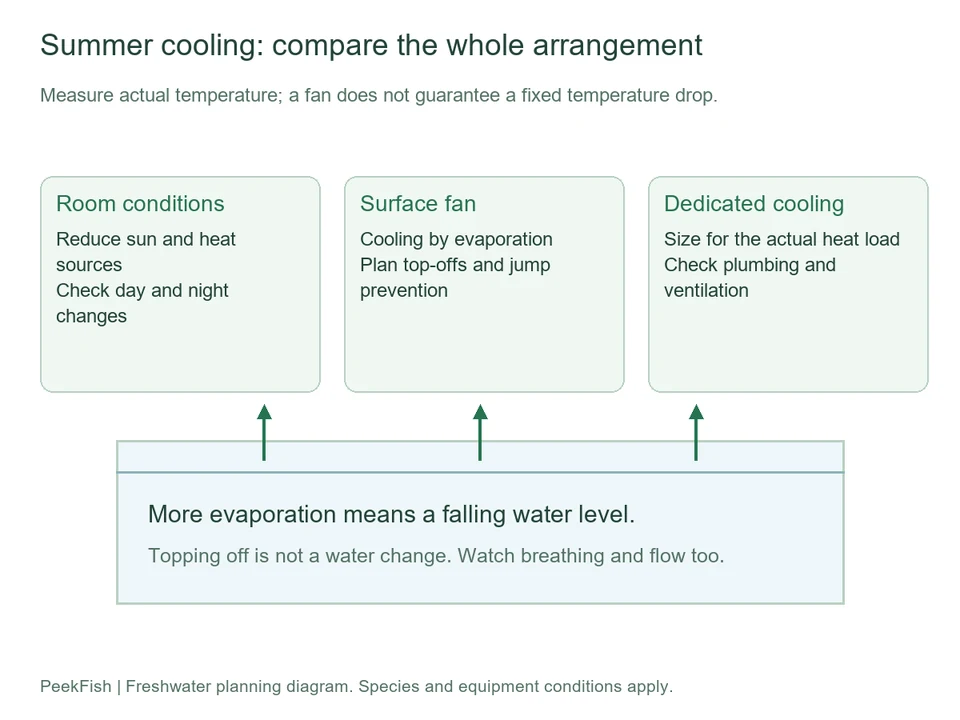
Find where the heat is coming from
Record cooler and hotter times of day. Check direct sun, nearby heat sources and heat from lights or equipment. Shading direct sunlight and improving room conditions are often more controllable than repeatedly adding something cold to the water. Do not move a filled aquarium to escape the sun; consider external shading and room arrangements first.
If temperature differs markedly from the heater setting, verify the thermometer and heater operation. A functioning thermostat should not keep heating water above its set point. Deal with a confirmed fault instead of adding a fan to fight it.
Choose a method for the actual environment
| Method | Purpose | Additional considerations |
|---|---|---|
| Room cooling and shading | Reduce heat entering the aquarium | Day-night changes, ventilation and power arrangements |
| Surface fan | Remove heat through evaporation | Humidity, top-offs, jump prevention and electrical safety |
| Dedicated cooling equipment | Actively control temperature | Actual heat load, equipment sizing, plumbing and ventilation |
A fan does not guarantee a fixed temperature reduction. Humidity, room temperature, surface area and airflow affect its performance. A device that cools another person’s small tank is not automatically suitable for yours.
Plan top-offs and jump prevention with a fan
Secure the fan against falling into the water and protect power connections as instructed. Improving surface ventilation must not create an unprotected escape route for fish. Use suitable jump prevention for the inhabitants.
Increased evaporation lowers water level. Track that change and prepare a suitable top-off method before pump intakes or heaters become exposed. Topping off mainly restores volume and does not replace routine water changes. An aquarium using specially prepared water needs a consistent, verified approach rather than a different source each day.
Watch breathing and circulation as well
Higher temperature affects oxygen availability and animals’ physiological demands. Verify circulation and surface gas exchange, and watch for abnormal breathing. Aeration can support exchange but does not replace necessary cooling or establish that prolonged high temperature is suitable for the fish.
Respond promptly to obvious distress and seek help where needed. Do not pour in icy water or use repeated ice additions that create uncontrolled fluctuations. Follow any cooling change with a thermometer rather than touch.
Verify the whole daily pattern
After installing cooling, record temperature, water level, fish behaviour and leaks during the hottest period and at night. Test the setup before leaving home, not as you walk out. When the heatwave ends, reassess ordinary temperature control so that a changed setting or faulty device does not cause a problem in the opposite direction.
Sources
- Aqueon: aquarium cooling in summer
- Aquarium Co-op: cooling methods during hot weather
- Tropica: circulation, equipment heat and temperature