A power cut can interrupt circulation, aeration, temperature control and automatic equipment together. How long a tank can cope depends on its animals, temperature and system, not a universal safe number of hours. This guide covers a freshwater aquarium during an outage and after electricity returns.
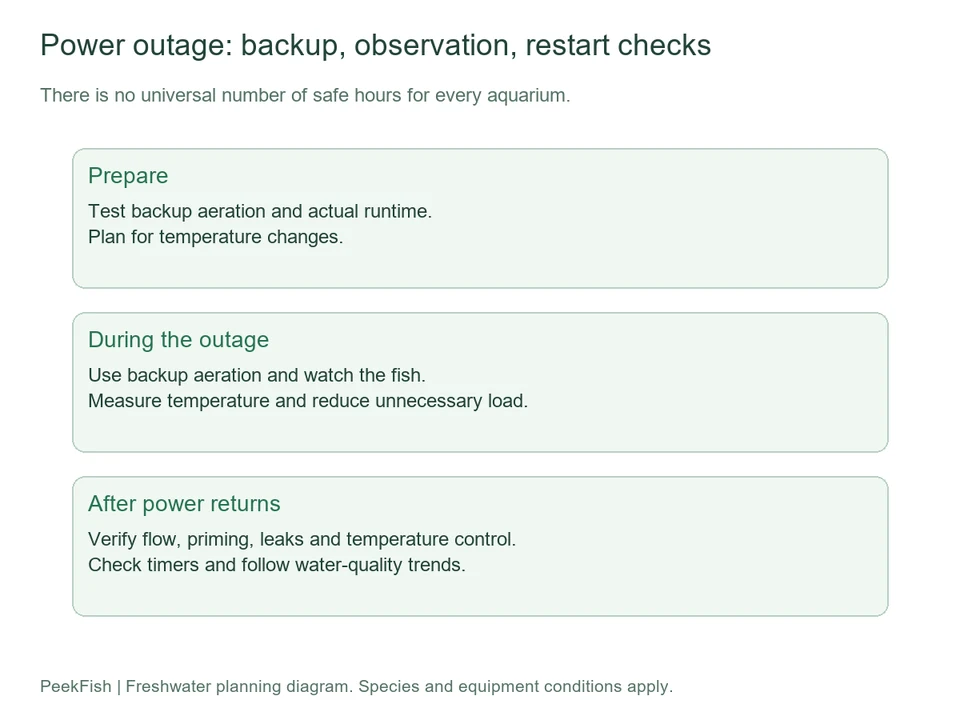
Prepare a backup that has actually been tested
Connect a backup air pump to compatible tubing and an air stone in advance. Check batteries, charging and automatic switchover where provided. With backup power, assess the actual equipment load and the power unit’s instructions, then test safely. A capacity label alone cannot establish that aeration, filtration and heating will run together all night.
For planned interruptions, find out the expected duration and prepare reliable replacement water, tools and contacts. Check possible backflow or overflow and the manufacturer’s anti-siphon requirements. Adding many fish or substantial food just before an interruption increases the demands on the system.
During the outage, prioritise oxygen and observation
Start the prepared backup aeration and watch for rapid breathing, gathering at the surface or loss of balance. Reduce unnecessary feeding and disturbance. Fry and other animals needing frequent feeding require a separate care plan rather than an indiscriminate prolonged fast.
Never operate fuel-powered generating equipment indoors or improvise unsuitable electrical connections. Wet sockets, electrical faults and other hazards require attention to human safety first and appropriate electrical assistance.
Measure temperature instead of reacting to room comfort
Use the species’ needs and measured water temperature. In cold conditions, reduce unnecessary heat loss without sealing off the surface and required ventilation. In heat, reduce sunlight and unnecessary heat sources while maintaining gas exchange. Do not pour in hot or icy water or repeatedly add ice to chase a temperature by feel.
A prolonged interruption, inadequate backup aeration or persistent animal distress may require expert assistance and suitable temporary housing. A temporary container also needs appropriate temperature, oxygen, water quality and jump prevention. Moving fish to a bucket is not automatically a safe solution.
When power returns, verify actual operation
- Check for leaks, unusual smells, damage and electrical hazards before restoring everything.
- Follow filter instructions for water level, valves, priming and air removal; verify real output.
- Check heating and temperature-control equipment, then confirm the actual temperature independently.
- Inspect light timers, feeders and controllers for lost settings.
- Record approximate downtime and animal behaviour; test ammonia, nitrite and other relevant parameters as indicated.
How to handle a stopped filter depends on its design, duration and conditions. A fixed hour count cannot establish that all biological media have failed. Do not force a restart despite obvious abnormalities; consult the manufacturer or a knowledgeable professional where necessary.
Restored electricity is not the end of monitoring
Continue checking flow, temperature, breathing and water-quality trends. Resume feeding according to the fish and water conditions, without replacing all missed food. Record which backup arrangements worked and which did not, so the next preparation addresses real weaknesses.
Sources
- Taiwan Ministry of Agriculture ornamental-fish resource: aquarium power cuts (Chinese)
- Aquarium Co-op: aquarium care during a power outage
- UF/IFAS: biological filtration and oxygen conditions