A travel plan involves more than asking how many days fish can go without food. Species, life stage, health, aquarium stability and time away determine the care needed. This guide helps plan for a freshwater aquarium; fry, sick fish, specialist feeders and unstable new setups need arrangements tailored to them.
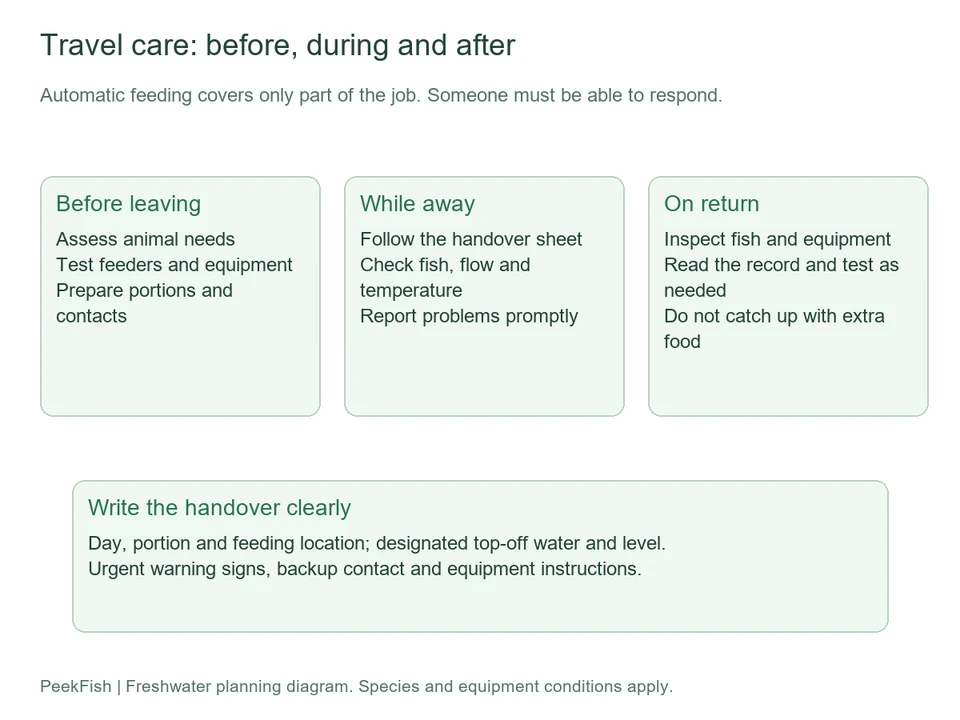
List the tasks that must continue
Write down the species and numbers, feeding methods, normal temperature, top-off needs and equipment requirements. Separate jobs reliable equipment can perform from conditions someone needs to observe. An automatic feeder cannot detect a leak, a power cut, a stopped filter or a fish being harassed.
Resolve existing breathing, water-quality or equipment problems and arrange capable ongoing care. Avoid adding a batch of fish, replacing the filtration system or rebuilding the aquarium immediately before departure, leaving the sitter an unfamiliar situation.
Choose and test the feeding arrangement
| Method | Requirements | Test before departure |
|---|---|---|
| A person feeds | A reliable person who can attend and understand the routine | Demonstrate, prepare portions and verify that the intended fish receive food |
| Automatic feeder | The animals accept food the device can dispense; installation is suitable | Portion, timer, batteries, moisture exposure and landing position |
| Adjusted short-term feeding | Suitability has been assessed for the species, stage and health | Do not use one fasting duration for all fish; equipment and emergency care are still needed |
Fish requiring live or frozen foods may not suit a pellet dispenser. Holiday food blocks are not unconditional insurance either: do not introduce an untested block as you leave. Establish whether it is eaten, what remains and how it affects water quality.
Allow observation time after maintenance
Do necessary maintenance while there is still time to watch the animals and equipment. Check water paths, connections, heating, light timers and operating water level. Avoid a major clean at the last minute. Test new feeders and controllers in their actual positions, including whether settings survive a power interruption or battery replacement.
Consider the weather, room temperature, cooling or insulation needs, and power-cut arrangements. If substantial top-offs are needed, show the sitter the correct level, designated water and circumstances in which they should stop adding it. Label containers clearly and keep prepared water separate from fertilisers and cleaners.
Leave a short handover sheet
- Feeding: Which day, which prepared portion and which location. Do not combine several missed portions.
- Observation: Fish activity and breathing, filter output, temperature and water on the floor.
- Top-offs: Use only the designated source and method to the marked level. Distinguish topping off from changing aquarium water.
- Problems: When to contact you immediately and who the backup contact is. Do not improvise medication, temperature changes or equipment dismantling.
- On-site information: Equipment names and essential operating instructions so the sitter can describe and handle agreed tasks accurately.
Photographs or a camera can supplement observation but cannot replace someone capable of attending. Longer trips, complex systems or special care needs warrant a person familiar with aquariums.
Check before returning to the usual routine
On return, inspect fish, equipment, water level and temperature, read the care record and test water as needed. Resume maintenance and feeding according to the findings. Do not compensate for days without personally feeding by adding extra food, or respond to some algae by washing the whole filter and substrate together.
Sources
- Aqueon: travel preparation and sitter arrangements
- Aquarium Co-op: feeding arrangements during an absence
- RSPCA: dietary needs