A routine water change removes some accumulated substances and debris while keeping the fish in a suitable, stable environment. In an established freshwater aquarium, it normally does not mean catching every fish, emptying the tank and scrubbing everything. This guide covers routine maintenance. Widespread gasping, deaths or an accidental chemical addition require investigation of the specific incident.
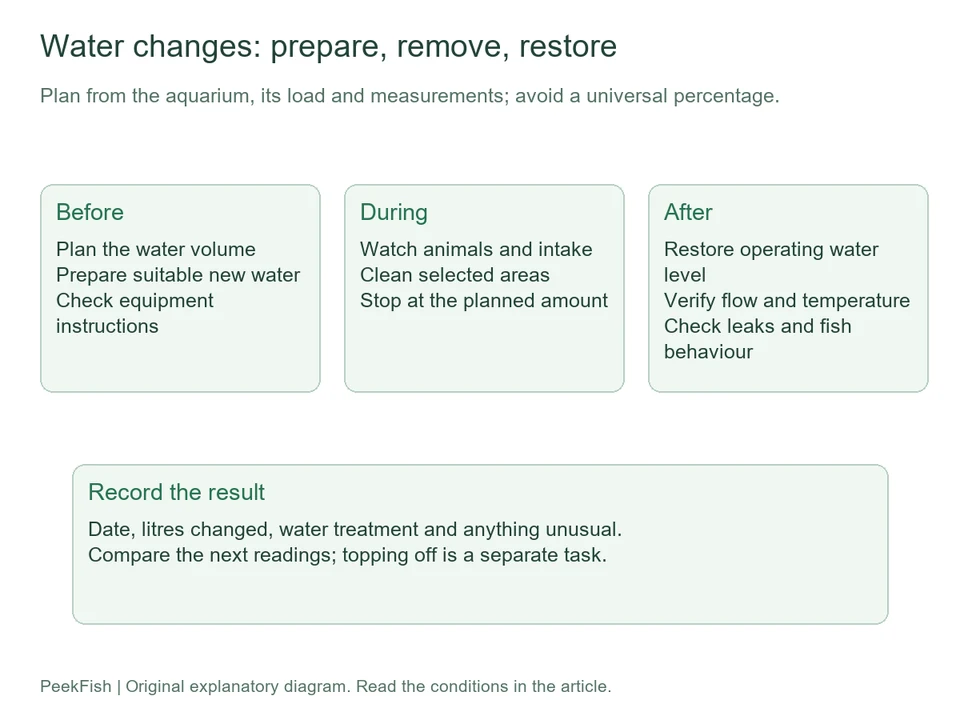
Decide how much to change before draining
Base the amount and schedule on actual water volume, fish size and numbers, feeding, plants, filtration and test results between maintenance sessions. Two tanks of the same size can have different demands. Record the previous change, current readings and fish behaviour, then adjust the routine from evidence. Clear water does not rule out ammonia.
The advertised tank capacity is not its actual water volume: substrate, decoration and the unfilled space matter. Use a container of known capacity to record litres removed. Taking 12 litres from a tank holding about 60 litres changes roughly one fifth. That is an example of record keeping, not a recommended percentage for every aquarium.
Prepare replacement water and equipment
- Use aquarium-only buckets, hoses and a siphon that have not contacted household cleaning products. Secure the drain end and prevent the receiving bucket from overflowing.
- Check whether your supply uses chlorine or chloramine. Use a suitable treatment according to its instructions and the volume being treated. Leaving water overnight is not proof that it has been treated adequately.
- Compare replacement water and tank temperatures with a thermometer. If the aquarium uses a particular water-mixing method, maintain that method rather than changing the source casually.
- Follow heater and pump instructions before putting hands in the water or lowering the level. Disconnect relevant equipment; allow a heater to cool in water as instructed before exposing or moving it. Never run it dry.
Remove waste where it needs removing
Start the siphon and work around visible food and debris, watching for fish, shrimp and fry. Routine spot cleaning can usually be done with the animals in the aquarium. Reduce flow using the tool’s controls when necessary. If an animal approaches the intake, stop the siphon before repositioning it.
Cleaning the bottom does not require turning over the entire substrate. Fine sand, planted substrates and coarse gravel need different treatment, especially near roots. Stop at the planned water volume instead of continuing to drain until every corner looks spotless. A water change is not automatically a reason to replace all filter media or rebuild the layout.
Refill, then check the restart
Add suitably treated replacement water gently. Avoid directing a strong jet onto fish or substrate; a clean deflector or appropriate refill hose can help. Restore the operating water level and restart filtration, circulation and heating according to their instructions. A filter that needs priming must not simply be allowed to run dry.
- Check that normal filter flow has returned and the intake is clear and not drawing air.
- Check hoses, filter bodies and joints for leaks; keep plugs and electrical connections dry.
- Verify the actual temperature with an independent thermometer, not just the heater dial.
- Compare swimming, breathing and the distribution of fish with their behaviour before maintenance.
Use the next check to improve the routine
Record the date, litres changed, replacement-water treatment and anything unusual. Testing comparable parameters before the next session helps reveal what happens between changes. If breathing suddenly worsens after maintenance, do not dismiss it as normal stress or add salt, medication and pH adjusters together. Check water preparation, temperature differences, equipment and relevant water measurements promptly; seek aquatic-animal expertise when needed.
Topping off replaces evaporated water without first removing aquarium water. Record it separately from water changes so that a consistently full tank does not create the false impression that accumulated substances have been removed.
Sources
- Aquarium Co-op: routine cleaning and water changes
- UF/IFAS: ammonia and testing
- MWRA: chloramines and aquarium water
- Tetra HT heater instructions: a model-specific example