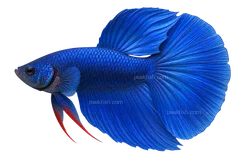
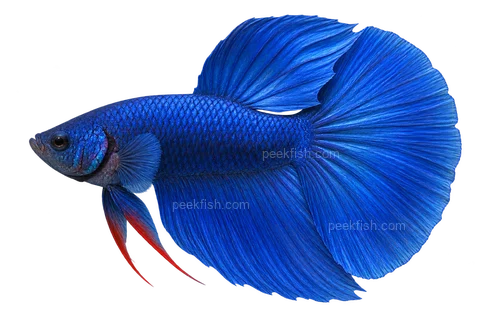
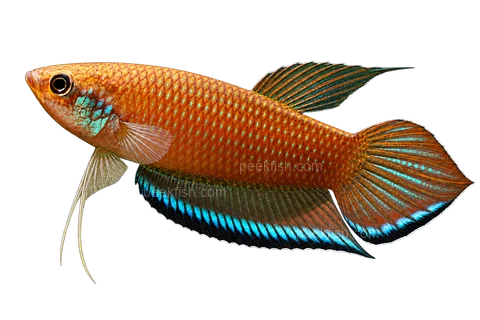
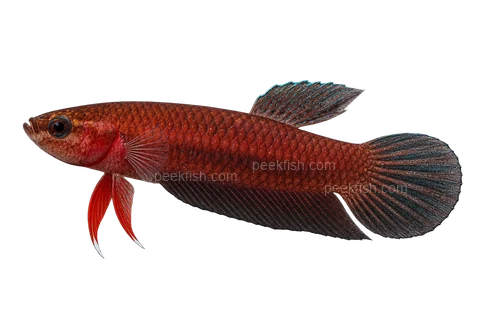
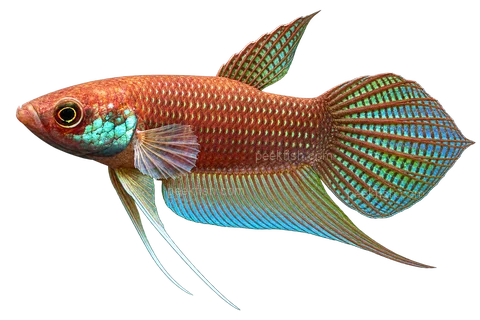
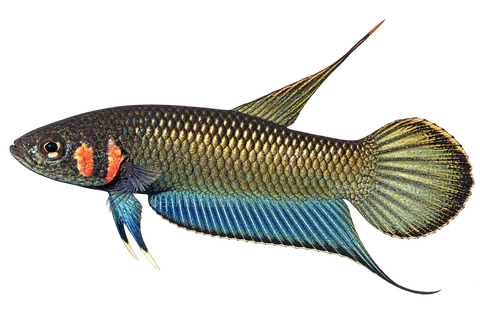
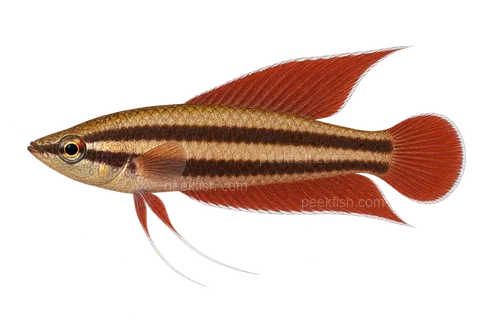
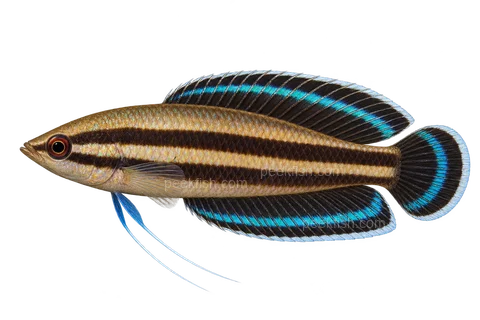
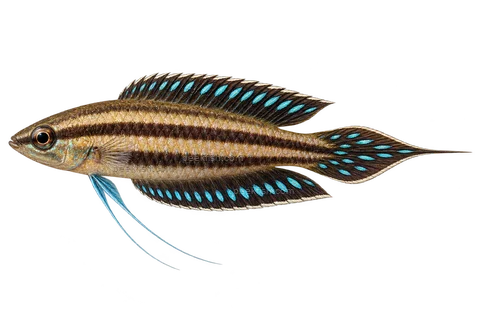
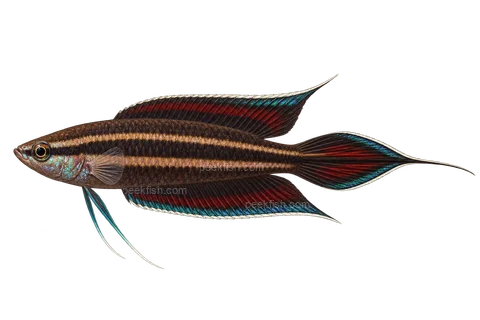
Siamese fighting fishAdult total length unknown
A source gives about 7 cm without specifying the length endpoint; it cannot calibrate this long-finned illustration. Typical adult total length and typical captive lifespan remain unknown.A domestic halfmoon male with a fan tail; plan around a single male’s territory.
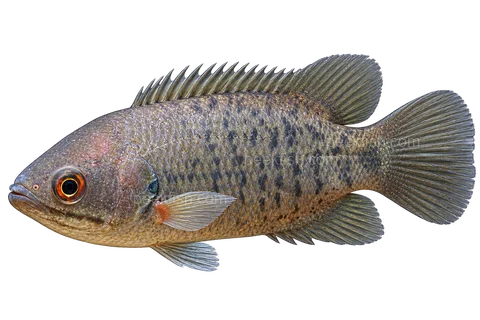
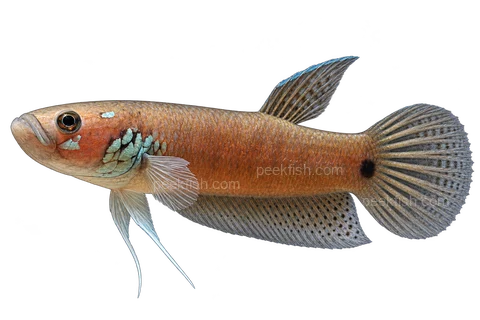
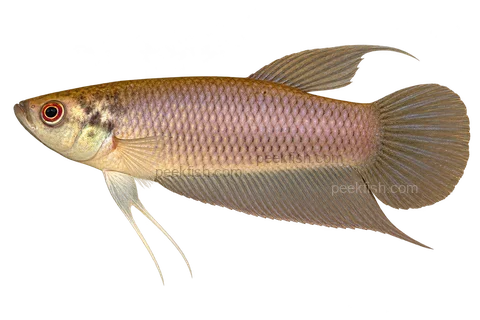
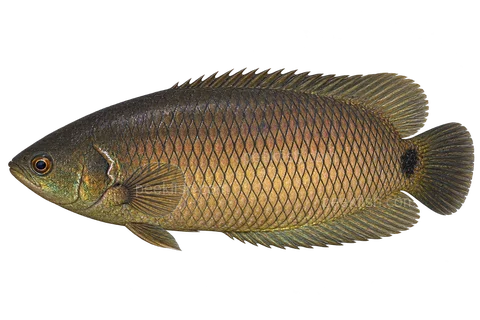
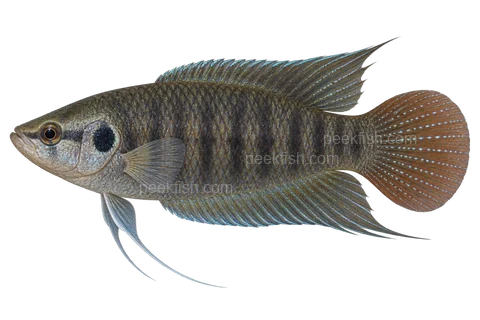
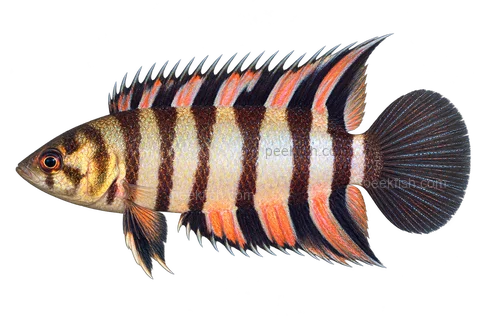
Anabas testudineusSource reports 20cm SLA sturdy fish with spiny gill covers. During breeding, males of some Indian populations become reddish with a black diamond on the caudal peduncle; females are rounder and thicker, with a less distinct tail-base mark.
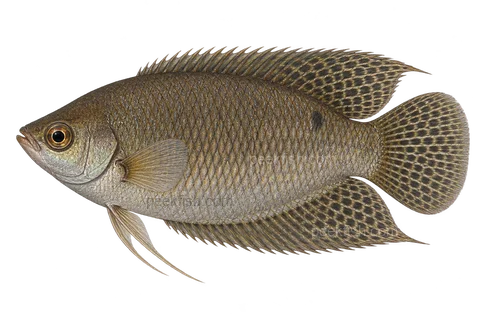
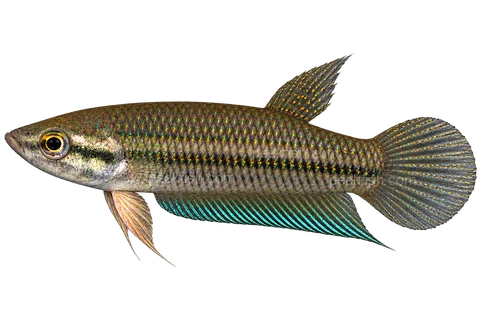
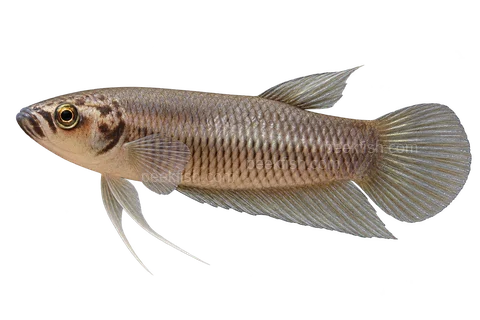
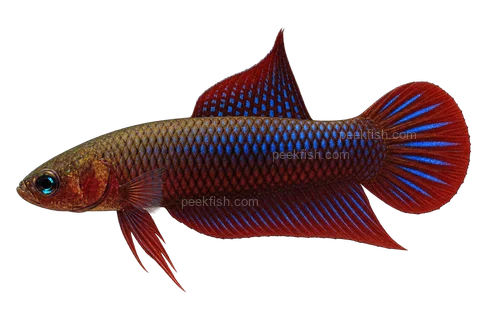
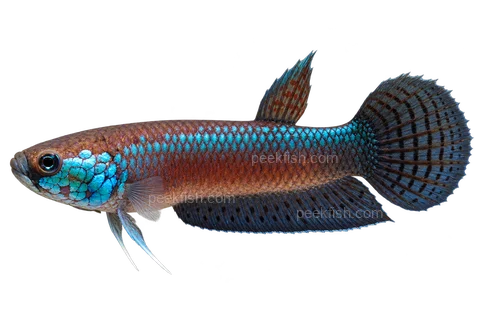
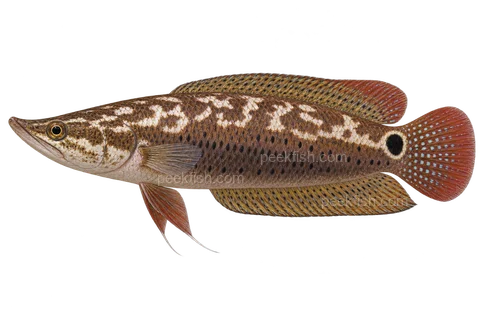
Java combtail20 cm SL · source observationGrey-brown with a mosaic across the fins.
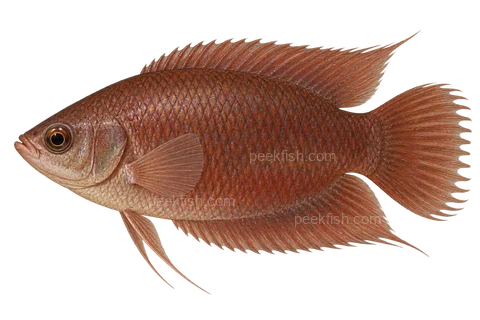
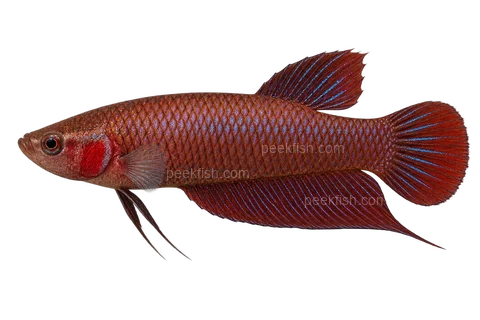
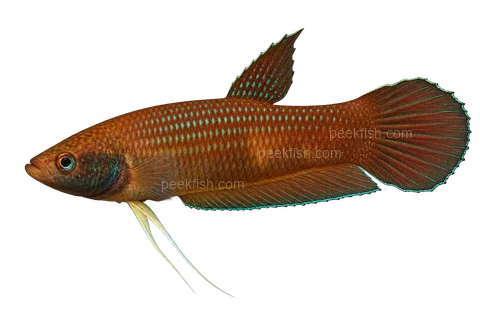
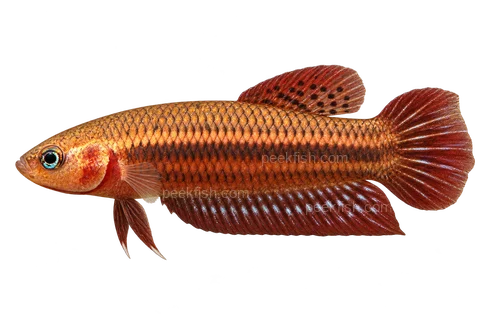
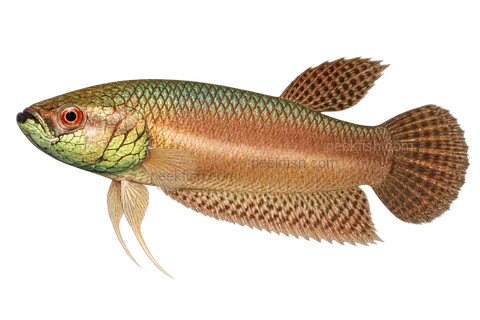
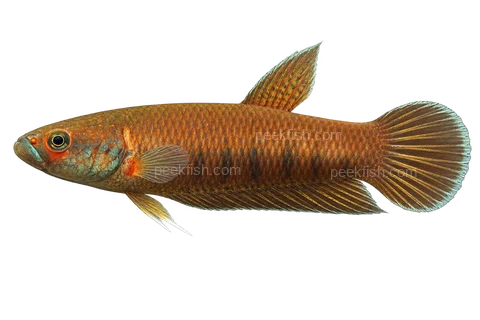
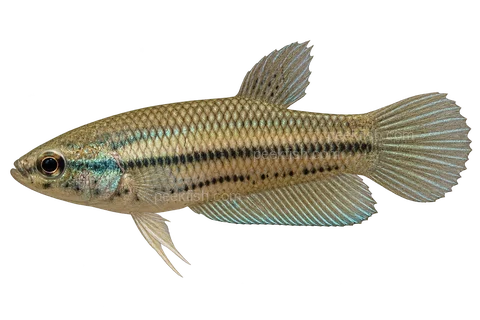
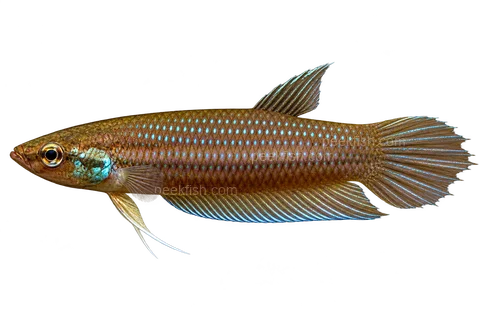
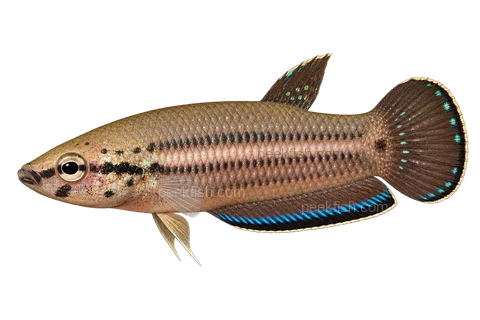
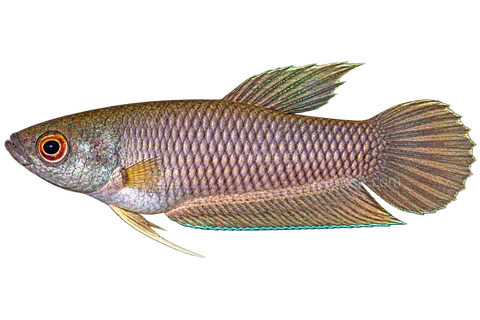
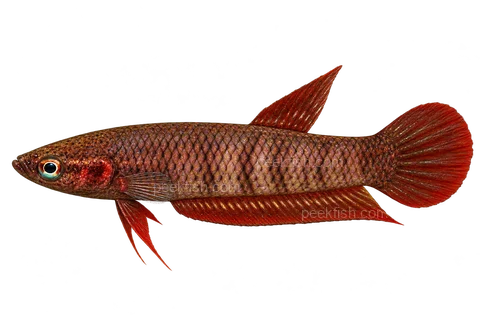
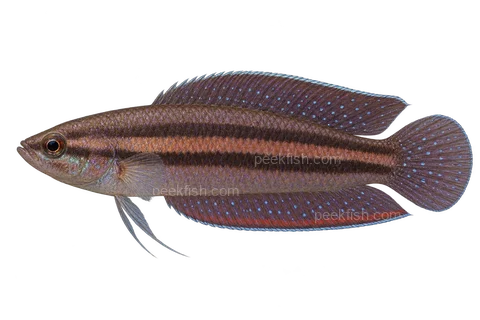
Ceylonese combtail12 cm SL · source observationReddish-brown combtail with plain fins.
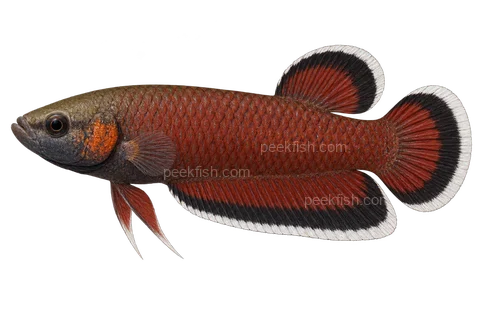
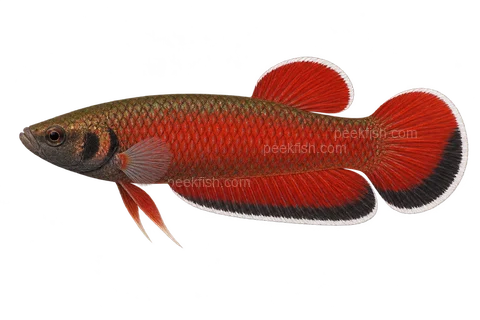
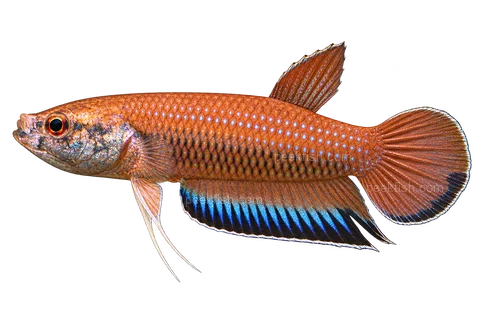
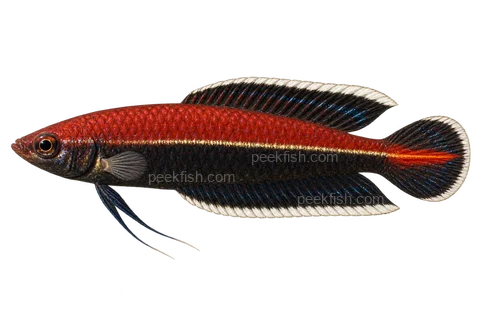
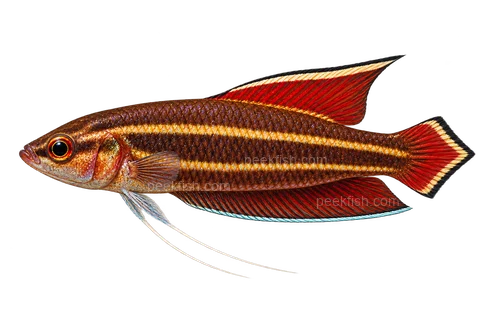
Betta albimarginata3 cm SL · source observationBrick-red males with broad black-and-white fin bands.
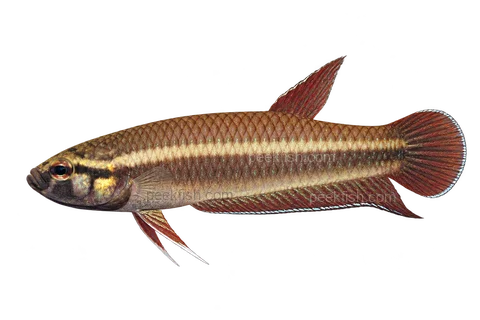
Betta apollonSource record: 5.18 cm SLIn adult males, the last branchiostegal ray of the gill membrane is unusually extended, with a white, laterally flattened tip. A black lower-jaw band, a second stripe behind the eye and a crossbarred tail are present.
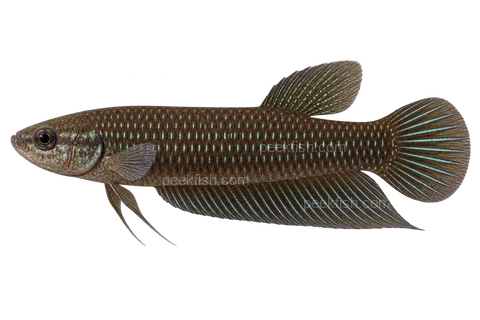
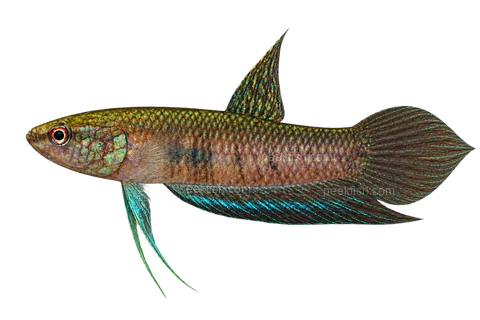
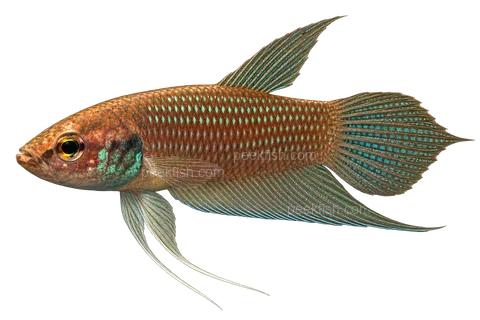
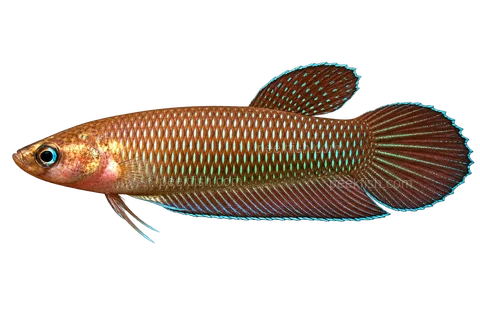
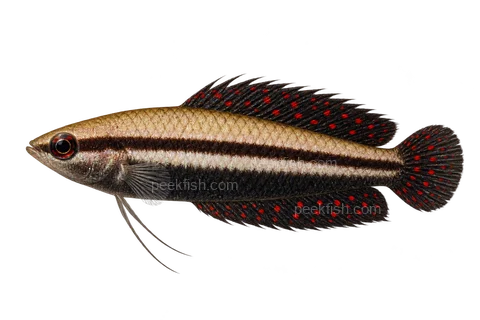
Slender betta9 cm SL · source observationSlender brown body with green scale highlights.
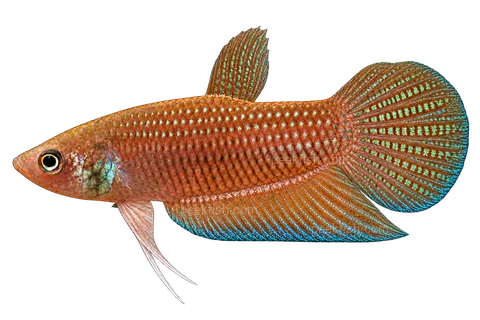
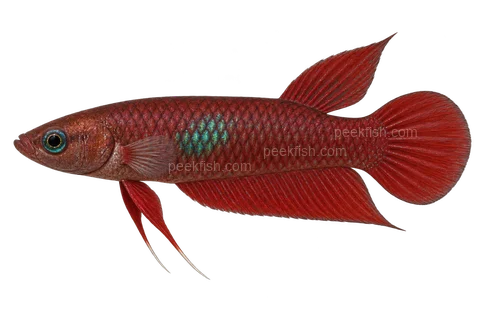
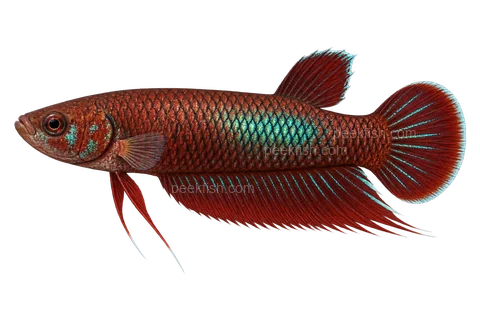
Betta brownorum3 cm SL · source observationA small red-magenta betta with a green flank patch.
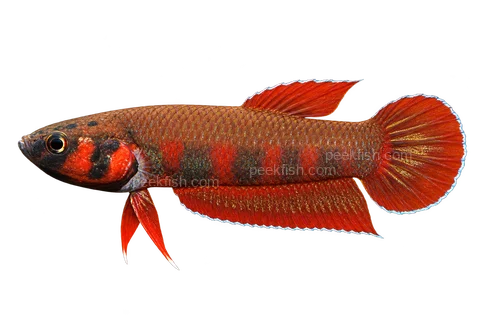
Betta burdigalaSource reports 35mm SLA small red bubblenesting betta with a short, rounded snout, no isolated bright flank spot, and bright green areas near the bases of the dorsal and anal fins.
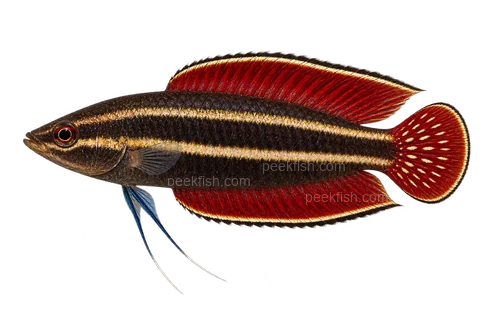
Betta channoides4 cm SL · source observationRed males with a mostly red dorsal fin.
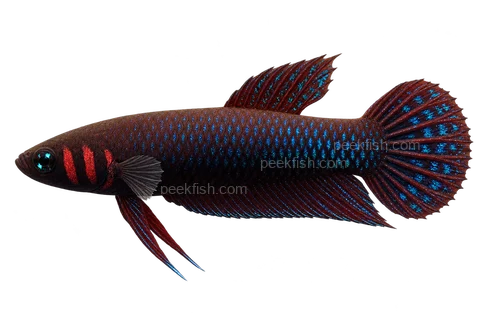
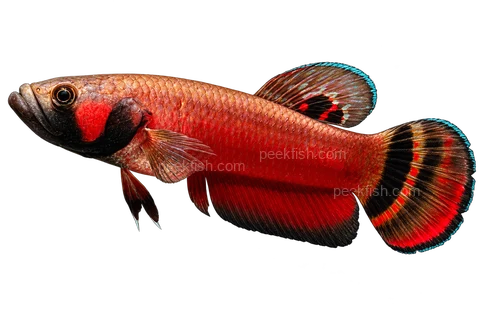
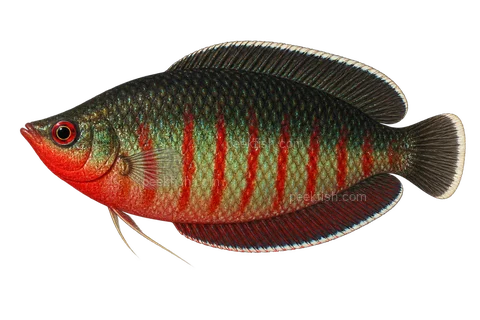
Betta coccinaSource reports 40mm SLA small dark-red bubble-nesting betta. Males have an iridescent green flank spot that females lack. The pelvic fins are red with long, slender black tips.
Betta cracensSource reports 60mm SLAn especially slender member of the pugnax-related group. Both sexes have a narrow blue anal-fin margin. This Sumatran betta is a paternal mouthbrooder.
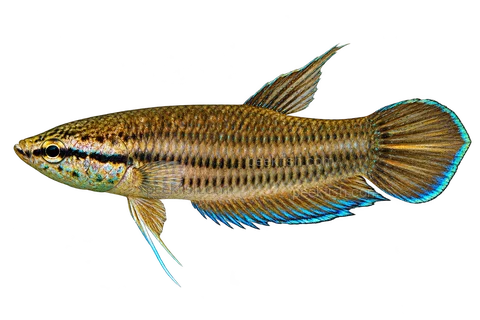
Betta dennisyongiSource record: 36mm SLA continuous black stripe runs from behind the eye to the gill-cover edge, with a broad triangular black patch below the eye. Males are less red than B. rubra, with wider spaces between black bars. A small mouthbrooder.
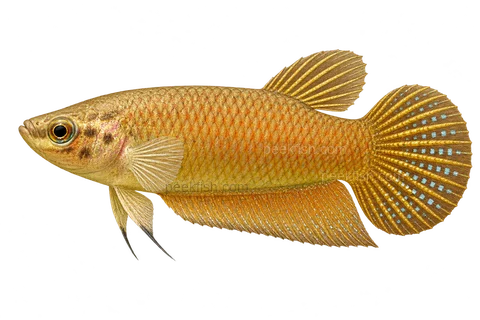
Betta dimidiataSource reports 40mm SLA reddish-brown body and golden gill-cover scales, with an elongated, spade-shaped tail in adults. This small mouthbrooding betta is easily confused with the round-tailed B. krataios.
Betta edithaeSource reports 60mm SLA relatively small head and eyes and short fins. Males have fine half-ring fin markings, females mostly rows of spots. The gill membranes and rear gill covers lack the usual metallic sheen. Males mouthbrood.
Betta enisaeSource record: 60mm SLBoth sexes have black crossbars on the tail, an important clue for identifying this Kapuas mouthbrooding betta. Colors and markings vary among localities.
Betta falxSource reports 50mm SLGill-cover scales shine blue-green, with reddish outer margins on the anal and caudal fins. Males also have dorsal-fin crossbars. A small Sumatran betta with paternal mouthbrooding.
Betta feroxSource record: 6.29 cm SLA deep body with reddish-brown flanks and a whitish belly, a black lower-jaw band and a second stripe behind the eye. The crossbarred tail is lance-shaped; the anal and caudal fins lack broad black margins.
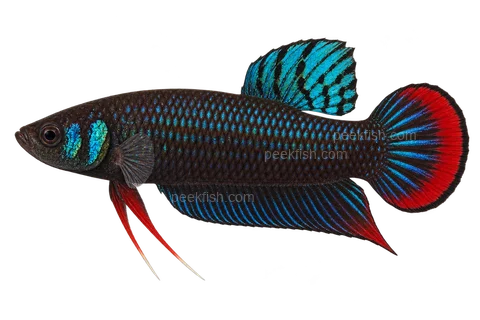
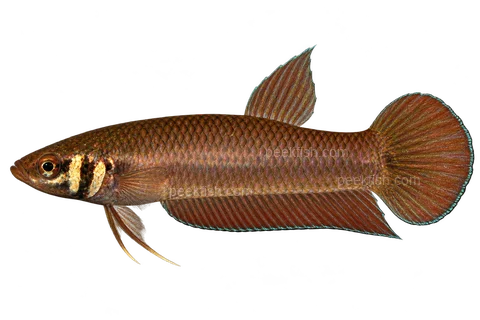
Betta foerschiSource record: 50mm SLTwo orange-red to golden vertical bars mark the gill cover, and the fins reflect blue-green. Compared with B. mandor, the body is shorter and deeper and the tail relatively shorter.
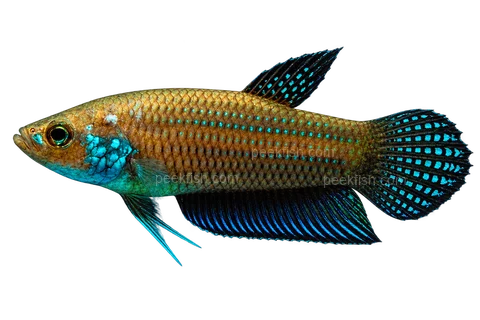
Betta hendraSource reports 45mm SLVivid green iridescence covers the flanks and dorsal, anal and caudal fins. Gill covers have vertical bars, and pelvic-fin tips are whitish. Males usually show stronger green and gill-cover markings.
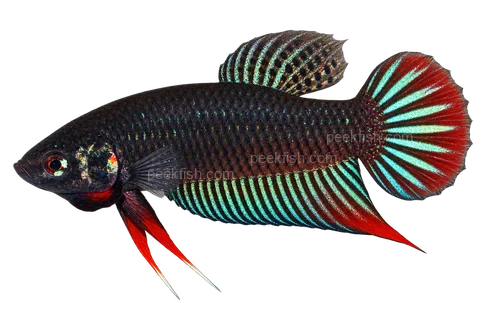
Betta imbellisSource record: 60mm SLA dark brown to black body with blue iridescence on the gill covers and fins. The tail lacks crossbars and has a red crescent along its outer edge; the rear anal-fin tip is red.
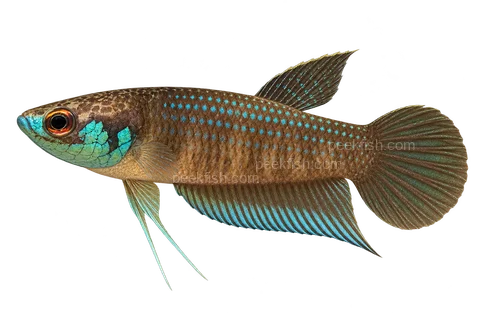
Betta krataiosSource reports 45mm SLA yellow-brown body, turquoise reflections on the gill cover and a rounded tail contrast with the reddish-brown body, golden gill cover and spade-shaped tail of B. dimidiata.
Betta kuehneiSource reports 60mm SLBoth sexes have rounded tails. Adult males show vivid blue or blue-green iridescence from the snout to the rear gill-cover edge, including the throat. There is no distinct transverse chin marking.
Betta lividaSource reports 36mm SLBoth sexes have a small iridescent green spot on the red flank that may fade with age. Parallel golden vertical bars mark the gill covers, and the broad pelvic-fin tips flash green.
Betta macrostomaSource record: 100mm SLMales are red with a red gill-cover patch and a conspicuous dorsal-fin eyespot; the gill cover lacks iridescent scales. A relatively large mouthbrooding betta from Brunei and Sarawak.
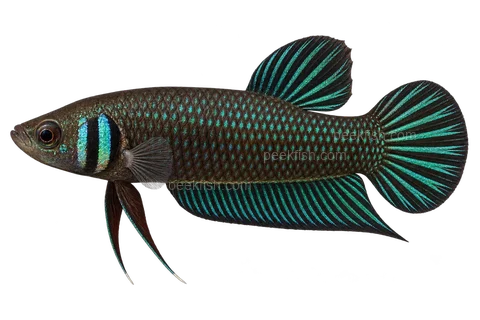
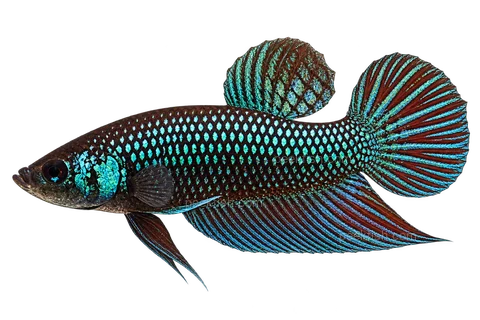
Betta mahachaiensisSource reports 60mm SLThe brown-black body flashes green or blue-green, with two parallel blue-green vertical bars on each gill cover. Dark fin rays contrast with iridescent membranes; there is no red crescent at the tail edge.
Betta mandorSource reports 60mm SLMales have a black base color, females brown, with two red to golden-yellow vertical bars on the gill cover. More slender than B. foerschi, with a relatively longer caudal fin.
Betta miniopinnaSource record: 35mm SLA slender black body with a slightly concave upper head profile, bright red pelvic fins with white filamentous tips, and no separate flank spot. It differs clearly from B. persephone, which has darker pelvic fins.
Betta ocellataSource record: 90mm SLA relatively large, slender mouthbrooding betta with a pointed, somewhat conical head, useful when comparing it with blunt-headed relatives. Males are usually larger with longer fins.
Betta pallidaSource reports 40mm SLThe pale-yellow head and body carry three longitudinal stripes: the middle one is continuous, while the rear of the lower one breaks into spots. The caudal peduncle is unspotted; males have a lance-shaped tail.
Betta pallifinaSource record: 90mm SLA relatively large mouthbrooding betta with a lance-shaped tail. Females have an orange band near the anal-fin margin; males have more iridescent scales on the head and body and longer fins.
Betta patotiSource record: 100mm SLA relatively large mouthbrooding betta with 10–14 dark vertical bars on the lower body and a lance-shaped tail. Locality forms include fish with stronger black markings or more red coloration.
Betta persephoneSource record: 35mm SLA black body without a separate flank spot, fins with a pale green sheen, and black to dark red pelvic fins with white filamentous tips. It is shorter and deeper-bodied than B. miniopinna, with a more convex upper head profile.
Betta piSource record: 90mm SLThe dark throat marking resembles the Greek letter π, with black lower gill covers. Both sexes have a broad blue anal-fin margin; the dorsal and caudal fins lack crossbars.
Betta pictaSource record: 50mm SLGolden-yellow gill-cover iridescence; males have narrow blue margins on the anal and caudal fins, and faint dorsal-fin crossbars may be visible. A small mouthbrooding betta from Java.
Betta primaSource reports 50mm SLA small mouthbrooding betta with a complete second post-eye stripe on the gill cover and no caudal-fin crossbars. It was often mislabelled B. pugnax or B. taeniata in earlier accounts.
Betta pugnaxSource reports 70mm SLGill-cover scales reflect blue. Males have a broad lance-shaped tail with crossbars. The anal fin has a red submarginal band and black outer edge; the caudal fin lacks a dark outer margin.
Betta rajaSource record: 70mm SLMature males have very long pelvic fins and black margins on the anal fin and lower tail. A mouthbrooding betta from Sumatra, previously mislabeled B. fusca in trade.
Betta renataSource reports 85mm SLA distinct dark kidney-shaped throat mark is separate from the dark lower jaw. The anal fin lacks a dark outer edge; pale markings occur on the dorsal and caudal fins.
Betta rubraSource reports 42mm SLMales are a richer red, with narrower gaps between broad black bars. The dark post-eye marking is interrupted, the gill-cover edge remains creamy white, and the triangle below the eye is narrower than in B. dennisyongi.
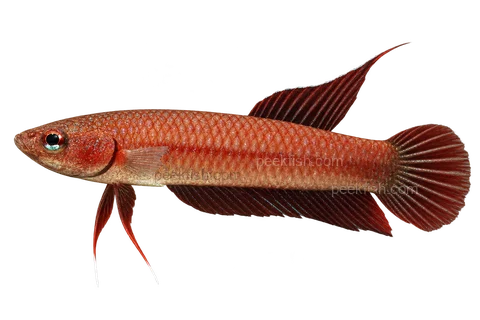
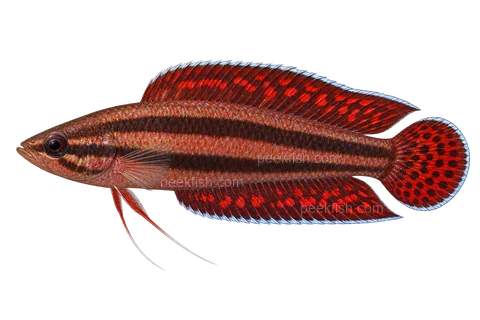
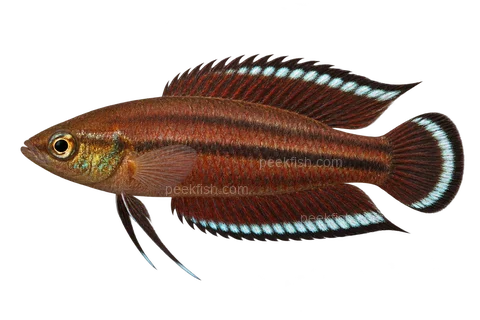
Betta rutilansSource record: 35mm SLDeep red throughout, without a separate flank spot or parallel gold gill-cover bars. Pelvic fins are red with white filamentous tips.
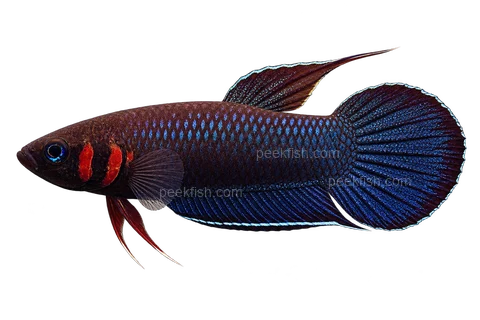
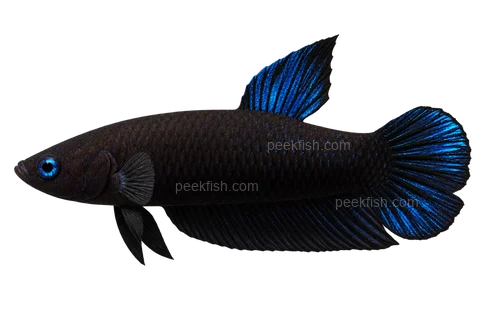
Betta siamorientalisSource record: 33mm SLMales are dark brown to black, with two usually reddish vertical bars on the black gill cover. Formerly called black imbellis, it is now recognized as a separate bubble-nesting betta.
Betta simorumSource reports 90mm SLSlender, with green iridescence on each dark-brown scale. The head slopes, with a distinct depression behind the eyes, and the pelvic fins are long. A relatively large bubble-nesting betta.
Betta simplexSource record: 60mm SLA dark red head, pale red body and fins, green-blue gill-cover iridescence and an indistinct chin crossbar. Males lack iridescent scales on the body.
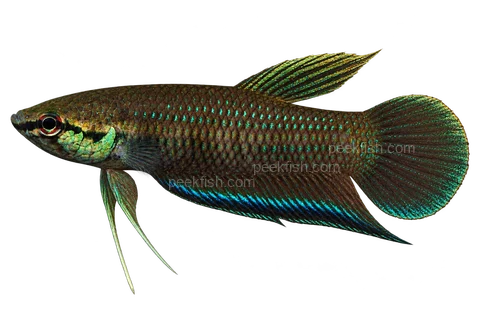
Betta smaragdinaSource record: 60mm SLGill-cover scales shine green against a light brown body. The tail has crossbars rather than the red crescent margin seen in B. imbellis, and the anal-fin tip is not red.
Betta spilotogenaSource record: 7.0cm SLA single pear-shaped dark throat patch does not connect to the black lower lip. Mature males have longer fins and broader heads; several spots may be visible on the gill covers.
Betta stigmosaSource reports 50mm SLBoth sexes have bars on the dorsal, anal and caudal fins: alternating blue and black on the dorsal and tail, black bars and a dark outer margin on the anal. A mouthbrooding betta from Malay Peninsula forest streams.
Betta strohi7 cm TLBoth sexes have rounded tails. Males have green to blue-green iridescence on upper-body scales over a brown base, with two orange-red gill-cover bars; female bars are more golden. The dorsal outline has a distinct angle where the head meets the body.
Betta tussyaeSource reports 37mm SLOrange-red, with two darker longitudinal stripes and pale-gold vertical gill-cover markings. There is no flank spot or green iridescent spotting on the fins. Red pelvic fins end in white tips.
Betta uberisSource reports 36mm SLA small red bubblenester with a relatively long dorsal-fin base. Green iridescent markings occur on the dorsal, anal and caudal fin membranes; males may or may not have a green flank patch.
Betta unimaculataSource reports 115mm SLMales are yellow-brown with reflective gill-cover scales and a blunt, slightly truncated head. The flanks lack dark vertical bars, but the dorsal, anal and caudal fins have crossbars. The dorsal fin has no eyespot.
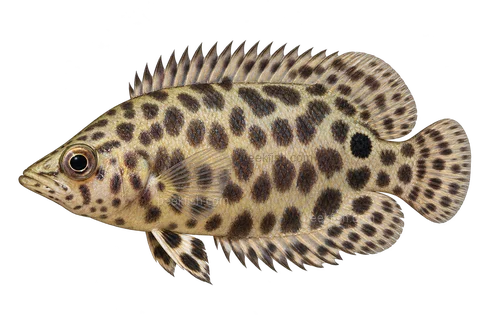
Ctenopoma acutirostreSource record: 150mm SLThe laterally compressed body is covered in dark leopard-like spots, with a pointed snout and a greatly expandable mouth. It often ambushes prey while holding still like a fallen leaf.
Ctenopoma kingsleyaeSource record: 250mm SLA black spot usually marks the tail base but may fade with mood. Note the large silver patch directly below the eye and silvery fin margins. Small juveniles may have a gold ring around the tail spot.
Ctenops nobilisSource record: 100mm SLThe head projects forward with a pointed mouth. Males have a rounder lower jaw; females have a straighter one. Mouthbrooding males develop cryptic marbled markings and retreat to quiet places.
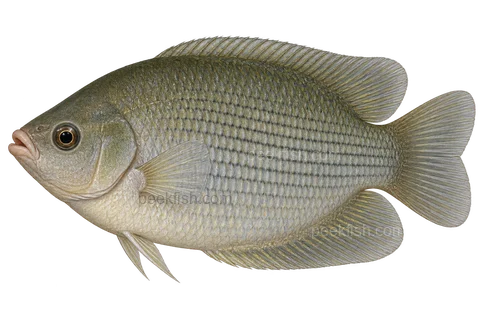
Kissing gourami25 cm SL · source observationFleshy lips; the pink-white form is the same species.
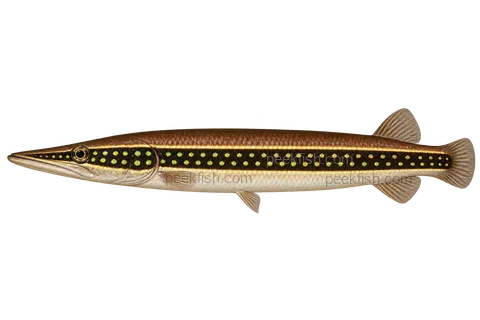
Luciocephalus auraSource reports 12cm measurement basis unknownA long head and huge protrusible mouth accompany a slender body. Conspicuous small iridescent flank spots are an important visible distinction from L. pulcher.
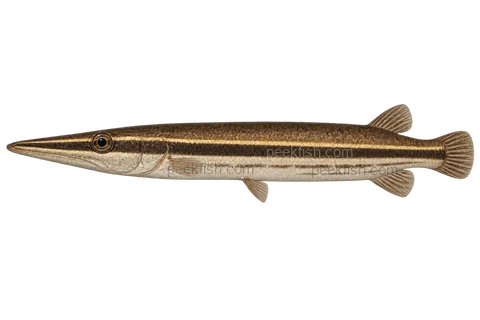
Luciocephalus pulcherSource reports 20cm SLIts long head and huge, highly protrusible mouth suit motionless ambushes in the middle and upper water. Unlike L. aura, its flanks lack dense iridescent spots. Males mouthbrood.
Macropodus erythropterusSource record: 80mm SLA reddish back and blue-green sheen above the anal fin, a forked tail, reddish patterns on the dorsal and caudal fin membranes, and a faint or absent gill-cover spot.
Roundtail paradise fish8 cm SL · source observationA rounded tail distinguishes it from fork-tailed paradise fishes; the postorbital stripe does not join the opercular spot, and populations vary in colour.
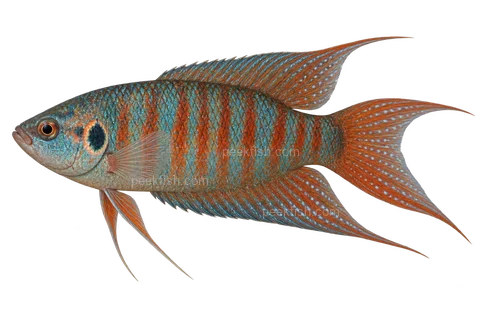
Paradise fish8 cm SL · source observationVertical red-blue bars, a dark opercular spot and a forked tail are useful clues in the natural form; albino and selected colours remain one species.
Macropodus spechtiSource reports 80mm SLA pale brown to dark gray body with darker scale edges, a forked tail, and black spots against blue fin membranes on the dorsal and caudal fins. The dorsal, anal and caudal fins lack the red pigment of M. erythropterus.
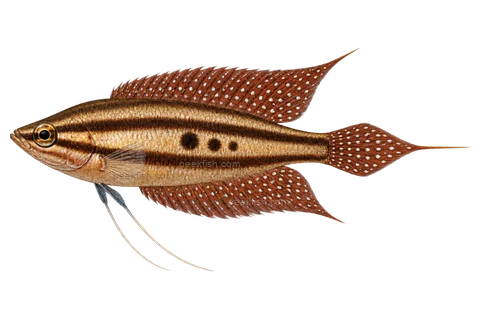
Malpulutta kretseriSource reports 50mm SLA spotted fish; males are larger, with extensions to the pelvic and unpaired fins. Different color forms have reddish, purple or blue fins and must not be counted as separate species.
Microctenopoma ansorgiiSource reports 7cm SLA reddish-brown body has a green sheen; dark vertical bars become prominent with mood. Males are deeper-bodied with much longer pelvic fins than females; subordinate males may have shorter dorsal and anal fins.
Microctenopoma congicumSource reports 6.19cm SLThe head and snout are rounded, with dark mottling on the flanks and unpaired fins. Adults may show narrow pale bands separating dark areas, a central pelvic-fin stripe and often two radiating marks behind the eye.
Microctenopoma fasciolatumSource record: 8cm SLMales have spots on the tail, dorsal and anal fins; females have plainer fins. A creamy horizontal flank stripe may appear or disappear with mood. Male dorsal and anal fin tips may be extended.
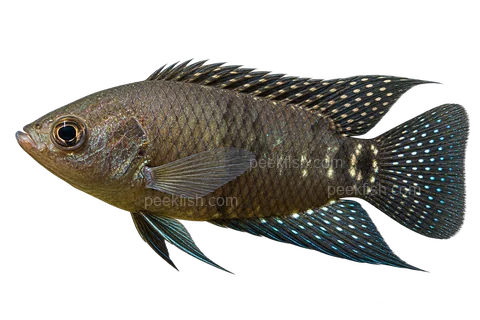
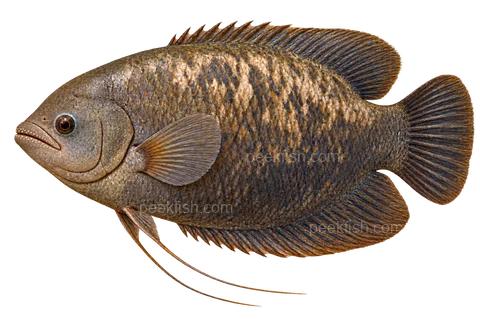
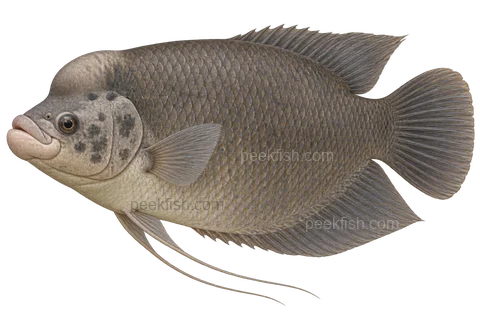
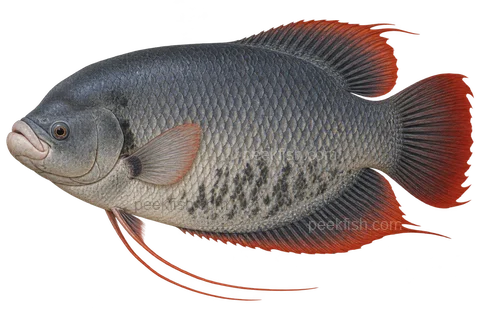
Giant gourami70 cm SL · source observationThick-lipped adults lose their juvenile bars.
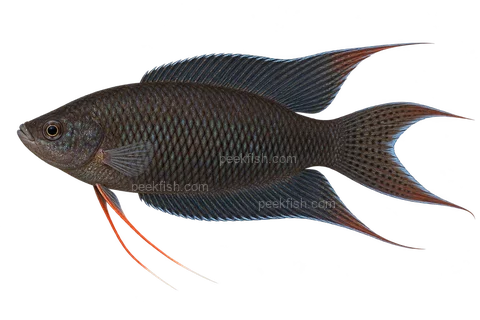
Giant red tail gourami50 cm SL · source observationA dark body with striking red fin margins.
Parasphaerichthys lineatusSource reports 19mm SLA tiny fish with a dark longitudinal flank stripe and no central eyespot. Courting males may briefly show a black head and orange rear body; females are larger.
Parasphaerichthys ocellatusSource record: 32mm SLA large eyespot marks the middle of the flank, but the dark horizontal stripe of P. lineatus is absent. Adult females are larger and deeper-bodied when carrying eggs.
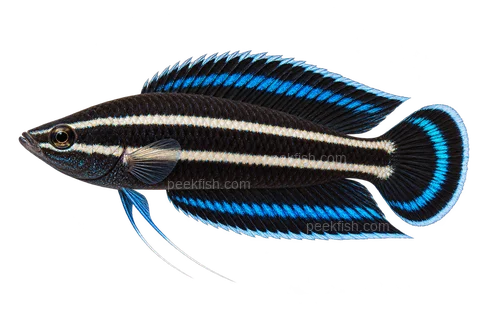
Parosphromenus allaniSource record: 35.0mm TLTail patterns are less regular than in tweediei. Females and juveniles should not be identified by color pattern alone.
Parosphromenus anjunganensisSource reports 26.0mm SLThe unpaired fins lack the bands seen in opallios, and the tail lacks the conspicuous black eyespot of barbarae.
Parosphromenus bintanSource reports 26.0mm SLA rounded tail with relatively continuous color bands on the dorsal, anal and caudal fins, unlike the long caudal filament of deissneri.
Parosphromenus deissneriSource reports 30.0mm SLThe caudal fin is roughly triangular to diamond-shaped, with a prominent filament. Older sources often used this name for other licorice gouramis.
Parosphromenus filamentosusSource reports 40.0mm TLA conspicuously extended caudal filament; the inner parts of the unpaired fins are reddish brown, with whitish-blue edges.
Parosphromenus gunawaniSource reports 28.0mm SLAdults are stockier than bintan. Males have parallel colored bands on the unpaired fins, usually with a greater proportion of reddish brown.
Parosphromenus harveyiSource reports 40.0mm TLUsually lacks red areas, but can still be confused with some locality forms in the bintan complex.
Parosphromenus juelinaeSource reports 32.3mm SLRed is more prominent on the flanks, and the tail is rounded. Color bands are less continuous than in bintan, and the tail differs from the filamented, diamond-shaped tail of deissneri.
Parosphromenus linkeiSource record: 28.0mm SLThe relatively large, somewhat lance-shaped tail has a filament, clearly distinguishing it from pahuensis with its round tail and no filament.
Parosphromenus nagyiSource record: 40.0mm TLDuring breeding displays, the body is pale above and dark below, with continuous blue bands on the unpaired fins. This coloration is not shown in every condition.
Parosphromenus opalliosSource reports 25.0mm SLDark bands on the caudal and dorsal fins; the rear dorsal fin usually lacks the distinct black eyespot seen in sumatranus.
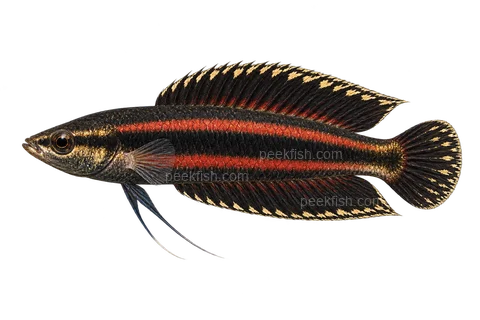
Parosphromenus ornaticaudaSource reports 18.0mm SLA slender fish with black unpaired fins bearing white spots and broad white margins. A red flame-shaped area marks the caudal fin.
Parosphromenus pahuensisSource reports 22.0mm SLA rounded caudal fin without a filament, unlike the somewhat lance-shaped, filament-bearing tail of linkei.
Parosphromenus paludicolaSource record: 37.0mm TLA relatively slender body and long pelvic-fin filaments. Tail shape varies among local forms, so retain provenance.
Parosphromenus parvulusSource reports 27.0mm TLIn breeding coloration, the upper body is pale and the lower body dark, with red spots on black unpaired fins. This differs from the white spots and flame-red tail of ornaticauda.
Parosphromenus phoenicurusSource record: 29.0mm SLThe tail is somewhat diamond-shaped, with an almost triangular inner pattern; tweediei has a rounder tail.
Parosphromenus quindecimSource record: 29.0mm SLA relatively compact, deep body, with horizontal flank stripes that may appear broken. Identification should also consider adult males and provenance.
Parosphromenus rubrimontisSource reports 25.0mm SLThe pelvic fins range from blue through blackish green to black, unlike the paler blue to white pelvic fins of alfredi.
Parosphromenus sumatranusSource reports 23.0mm SLA conspicuous black eyespot marks the rear dorsal fin, while the tail is relatively uniform in color. May adopt a head-up posture during courtship.
Parosphromenus tweedieiSource reports 25.0mm SLIts rounded caudal fin has a more regular pattern than allani and differs from the diamond-shaped tail of phoenicurus. Individuals with more blue can be confused with alfredi.
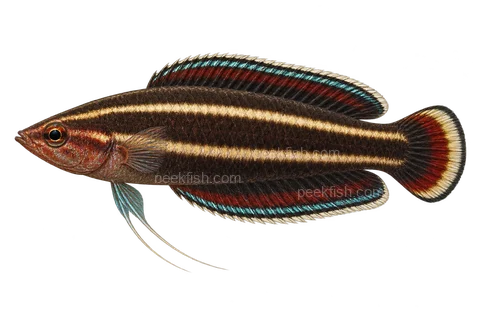
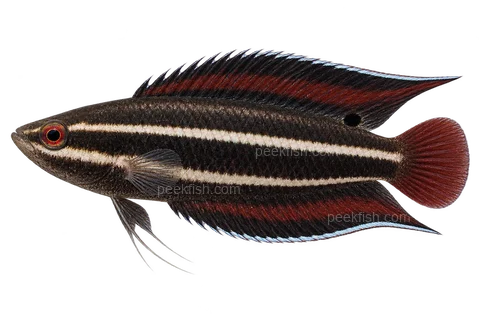
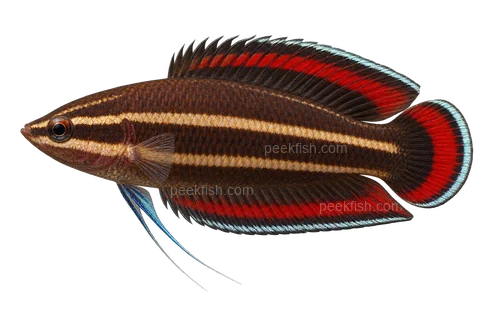
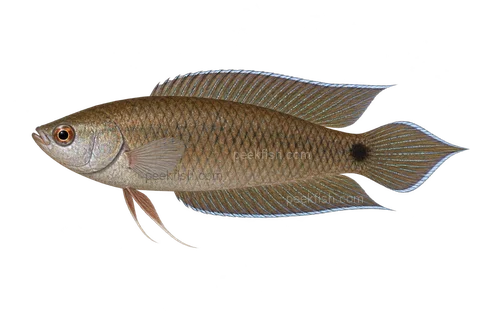
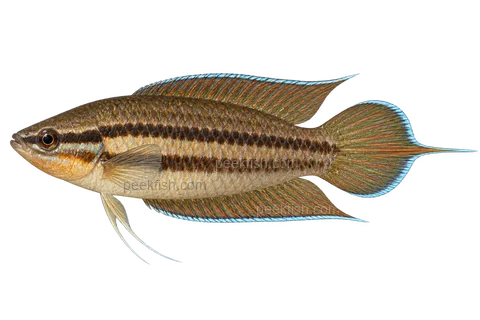
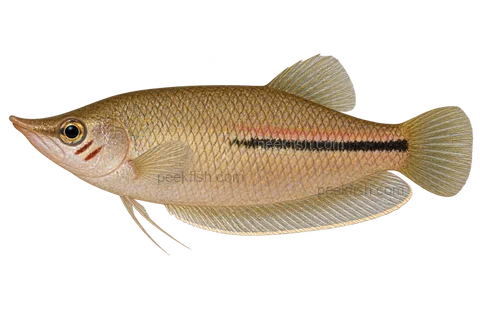
Brown spiketail6.5 cm SL · source observationPlain flanks, a dark tail base and a short male tail point.
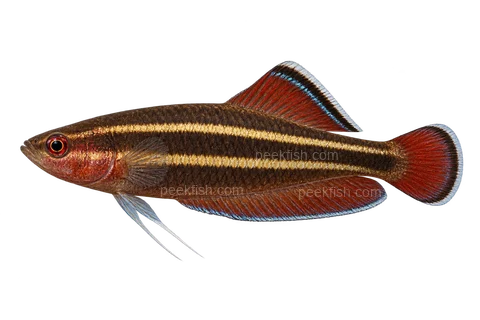
Day’s spiketail6.5 cm SL · source observationTwin dark stripes and a pointed male tail.
Sphaerichthys acrostomaSource reports 70mm SLRelatively slender, with a pointed snout. Excited males develop a stripe from the tail base to midbody; in females, scale rows on the front belly and anal-fin base darken, and the throat and fins become redder. Males mouthbrood.
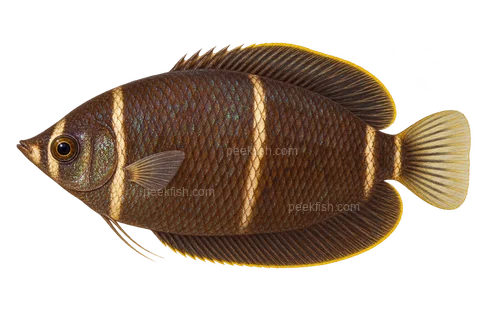
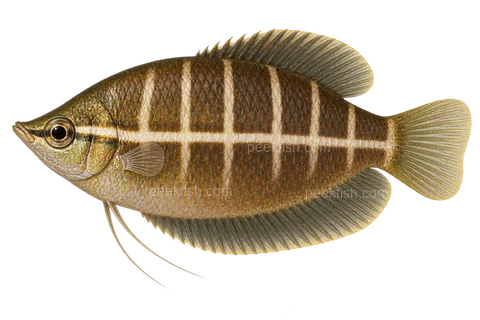
Sphaerichthys osphromenoidesSource record: 50mm SLA compact brown body with pale vertical bands; courting females may turn rich chocolate brown with gold bands. Females have a rounder lower jaw and mouthbrood.
Sphaerichthys selatanensisSource record: 45mm SLThe brown to reddish-brown body has pale vertical bands, with one more band on each side than S. osphromenoides. Females have a rounder lower jaw and mouthbrood.
Sphaerichthys vaillantiSource record: 55mm SLFemales in good condition show alternating red and green vertical bands, brighter during courtship. Males are browner, have a rounder lower jaw and mouthbrood. Colorful individuals are usually female.
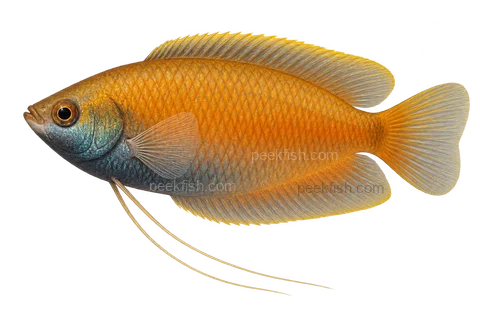
Honey gourami5.5 cm SL · source observationNatural breeding males show honey colour and a dark throat and belly; a lateral dark stripe is more apparent in typical females.
Thick-lipped gourami10 cm SL · source observationThick lips and larger size help recognition; sunset forms remain this species and should not be identified as honey gouramis by colour alone.
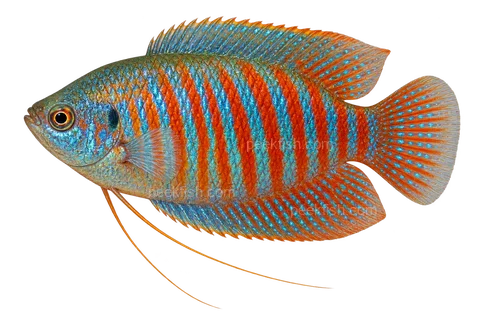
Dwarf gouramiAbout 8 cm · basis unverifiedA red-and-blue male with long, threadlike pelvic fins
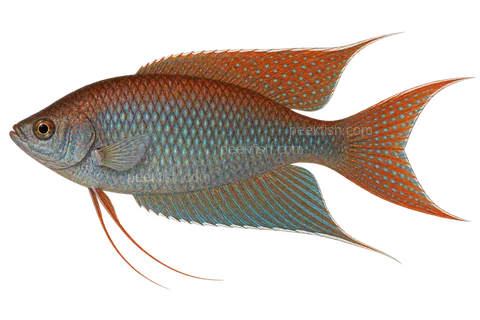
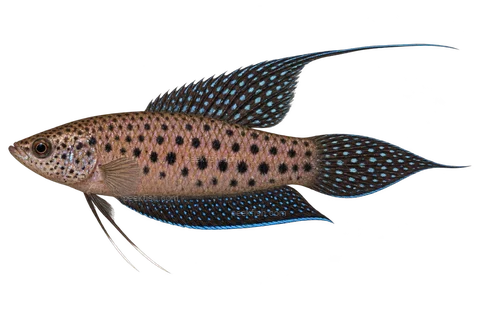
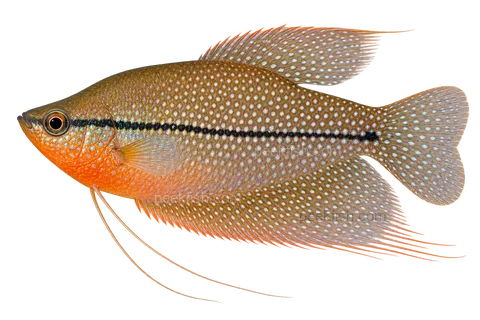
Pearl gourami12 cm SL · source observationPearl-like spotting covers the body and fins, crossed by a dark lateral stripe; adult males develop stronger orange-red throat colour.
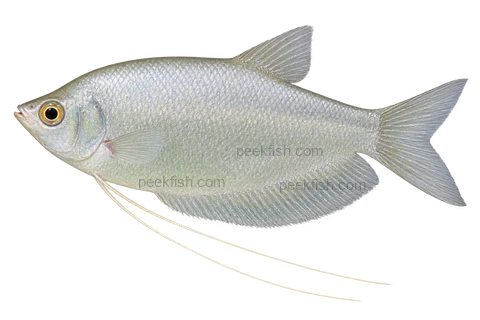
Trichopodus microlepisSource reports 150mm SLA bright silver body with very long, feeler-like pelvic fins. These are orange to red in males and yellowish in females, and more conspicuous than in many relatives.
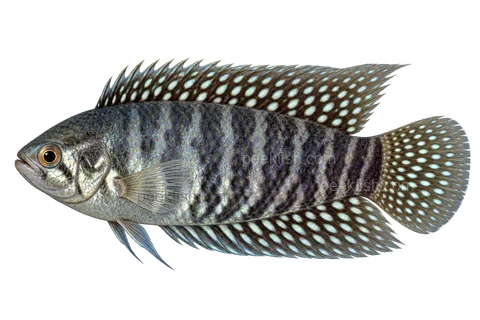
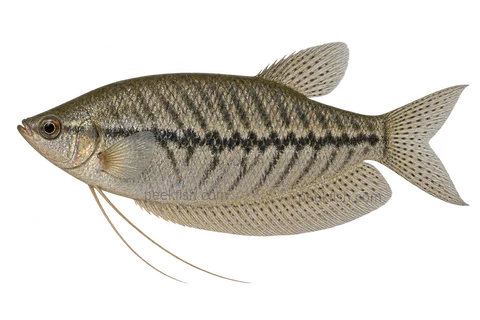
Snakeskin gourami30 cm SL · source observationReticulated snakeskin markings and a dark longitudinal band accompany an adult size much larger than typical sale juveniles.
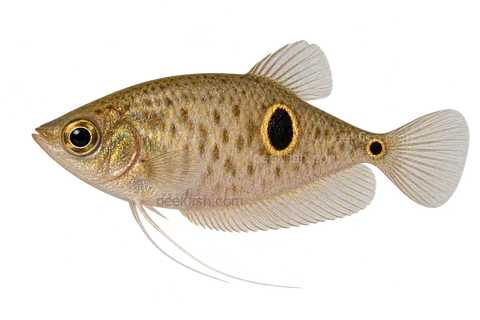
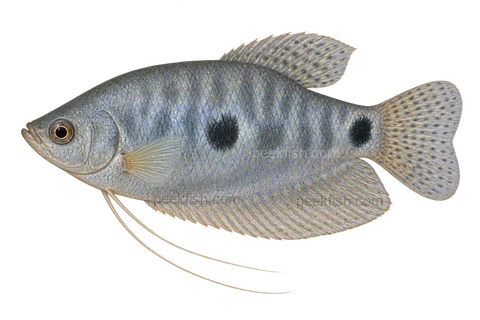
Three-spot gourami15 cm SL · source observationThe typical blue form has dark body and caudal-peduncle spots; gold, opaline and blue are forms of one species.
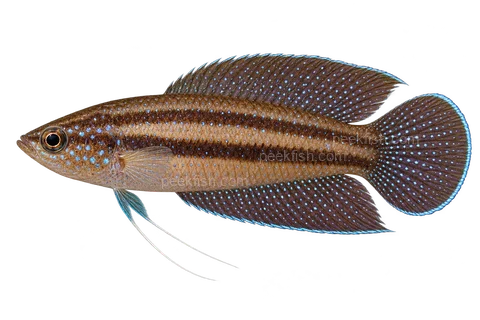
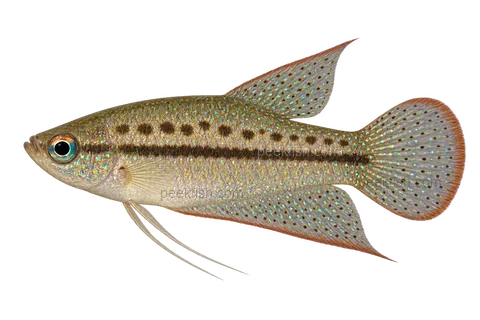
Sparkling gourami4 cm SL · source observationFine blue-green points sparkle over the small body and fins. A continuous dark side stripe lies below a separate row of dark blotches.
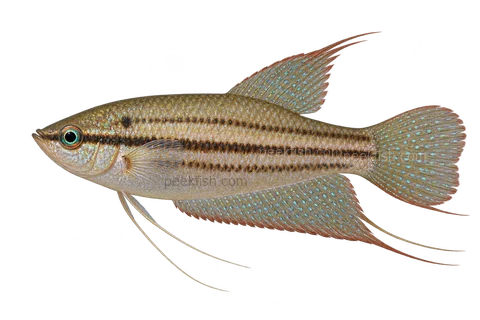
Schaller’s gourami5 cm SL · source observationA solid side stripe with a changeable upper stripe.
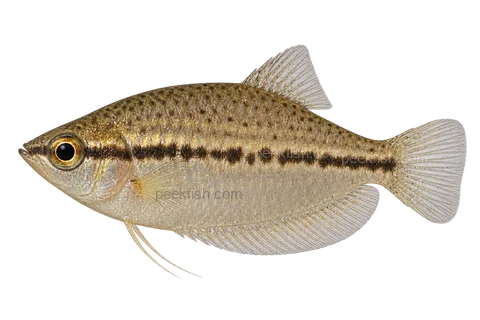
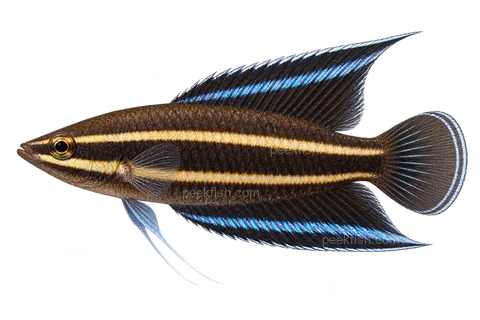
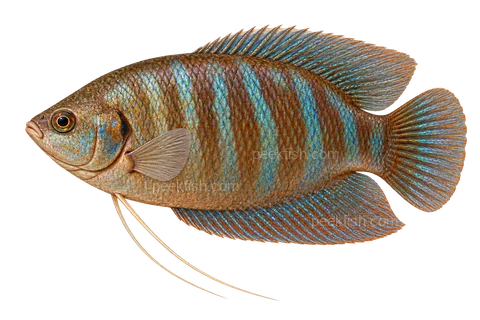
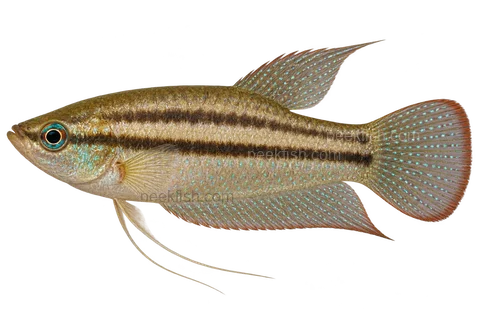
Croaking gourami7 cm SL · source observationUsually three dark lines run along the flank, often with a dark spot above the pectoral fin. Mature males have long rear anal-fin rays; colour and stripe intensity vary among populations and states.
Bettas and gouramis: fin forms and species differences
A betta tail form is not a species
Domestic Siamese fighting fish can have striking colours and different fin forms. A halfmoon or long-fin label does not by itself identify a separate species. Check species identity before domestic form and sex. Other betta species and wild forms should not be judged solely against a familiar long-finned male.
Pearl gouramis are a different comparison
Trichopodus leerii has its own body shape and markings. Mature males develop stronger orange-red throat and chest colour and fin extensions. Check sex and stage before treating different appearances as different species. Its adult space also needs its own assessment rather than a setup borrowed from a Siamese fighting fish.
Surface breathing does not justify a bowl
RSPCA’s Siamese fighting fish guidance addresses space, temperature, water quality, cover and access to surface air. Surface breathing does not remove those needs. Long fins also warrant attention to sharp decoration. There is no single tank size here that applies to every betta and gourami.
Read social behaviour species by species
Male Siamese fighting fish require particular caution because of fighting. Pearl gouramis may be described as relatively peaceful, but males can still be territorial and breeding brings additional pressures. A peaceful label or a shared gallery is not a compatibility decision. Check adult size, sex, social needs and limitations in the profile. A calm virtual scene is not evidence of how live fish will behave together.
 EN ▾
 ZH