 EN ▾
 ZH
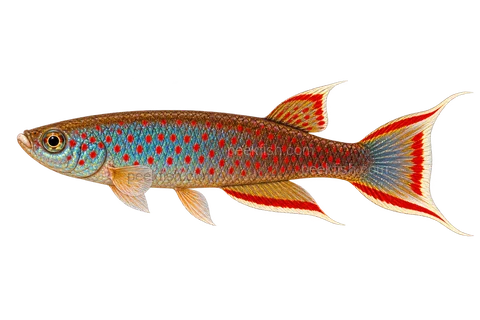
Cape Lopez lyretailUp to 6 cm · 21–24 °CScattered red spots and a lyre tail; gold and chocolate are forms of one species.
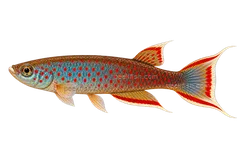
Compare clown killifish with Eggers’ killifish to understand markings, annual life cycles and the meaning of colour and locality labels.
Read the full guide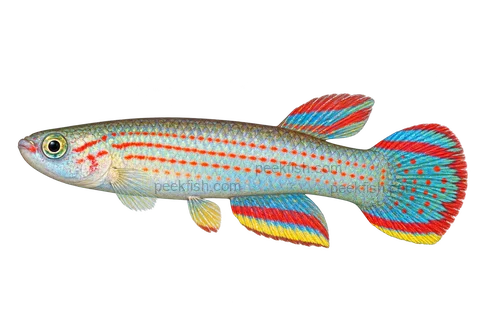
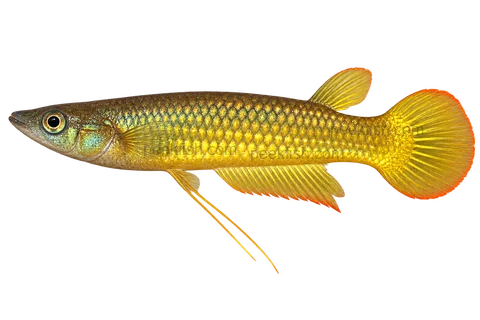
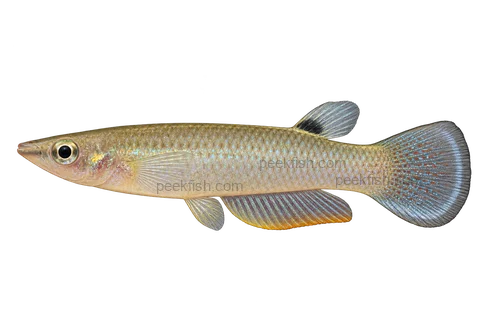
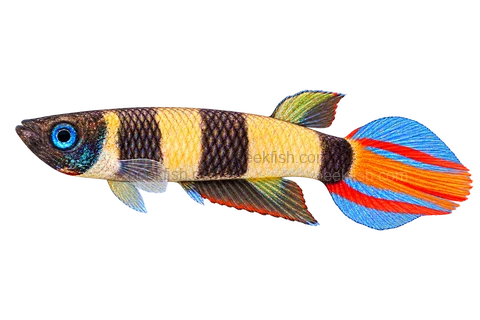
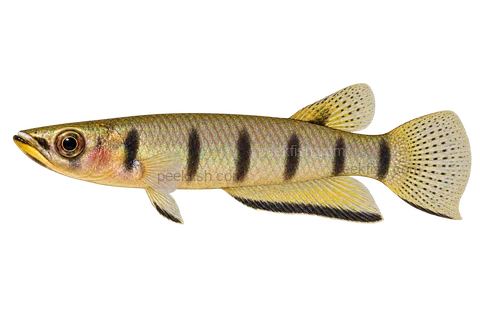
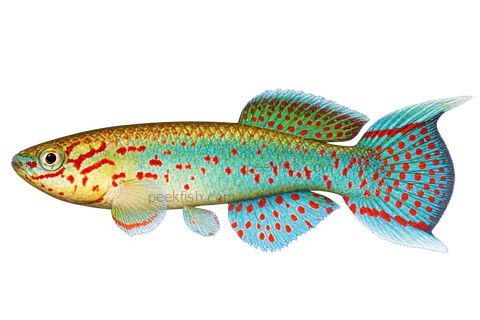
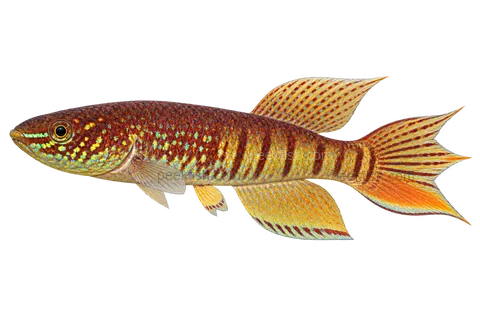
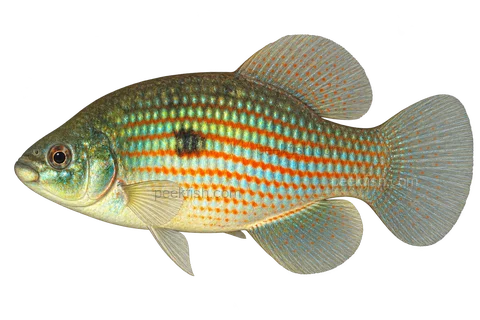
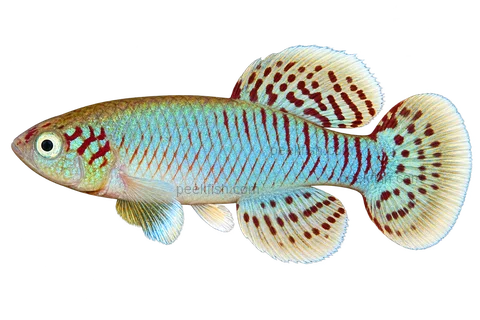
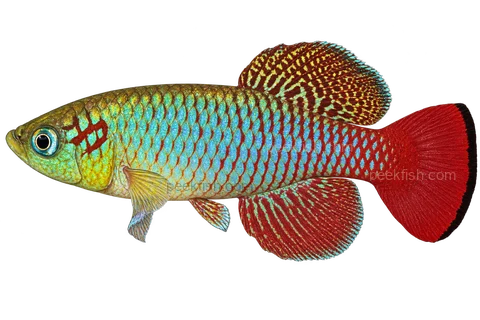
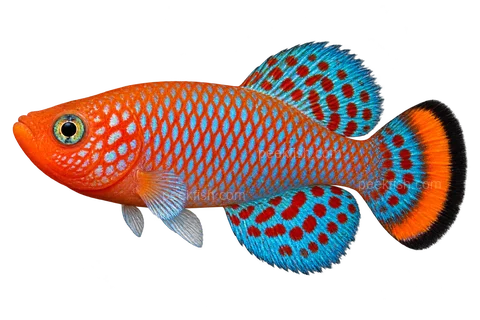
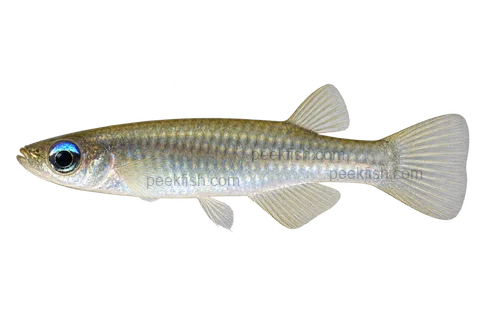
This gallery includes egg-laying ornamental killifish such as Epiplatys annulatus and Nothobranchius eggersi. Japanese ricefish and livebearers have separate entrances. Clown killifish references may also use Pseudepiplatys annulatus. Check whether a different genus name represents a naming change before treating it as an extra species.
Broad dark bands alternating with pale areas help locate a clown killifish candidate. Males are generally more colourful and develop longer fins. A vivid male tail is not the appearance of every individual. Compare body bands, tail and other fins, then check sex and stage. Small size and attractive colour still leave feeding, water conditions and competition to assess.
Eggers’ killifish is an annual species from seasonal waters that dry out, with eggs persisting in the substrate. The clown killifish profile instead describes eggs laid among plants or spawning material and developing in water. Annual does not mean every captive individual lives exactly one year. Lifespan, seasonal habitat and egg development are separate questions; no fixed lifespan or universal dry-incubation timetable is inferred here.
Eggers’ killifish has red and blue forms, with variation among populations. Colour alone does not make another species. For a breeding population with a locality code, preserve its source records and avoid mixing origins while retaining the original label. A representative illustration cannot establish the locality or ancestry of an individual fish.